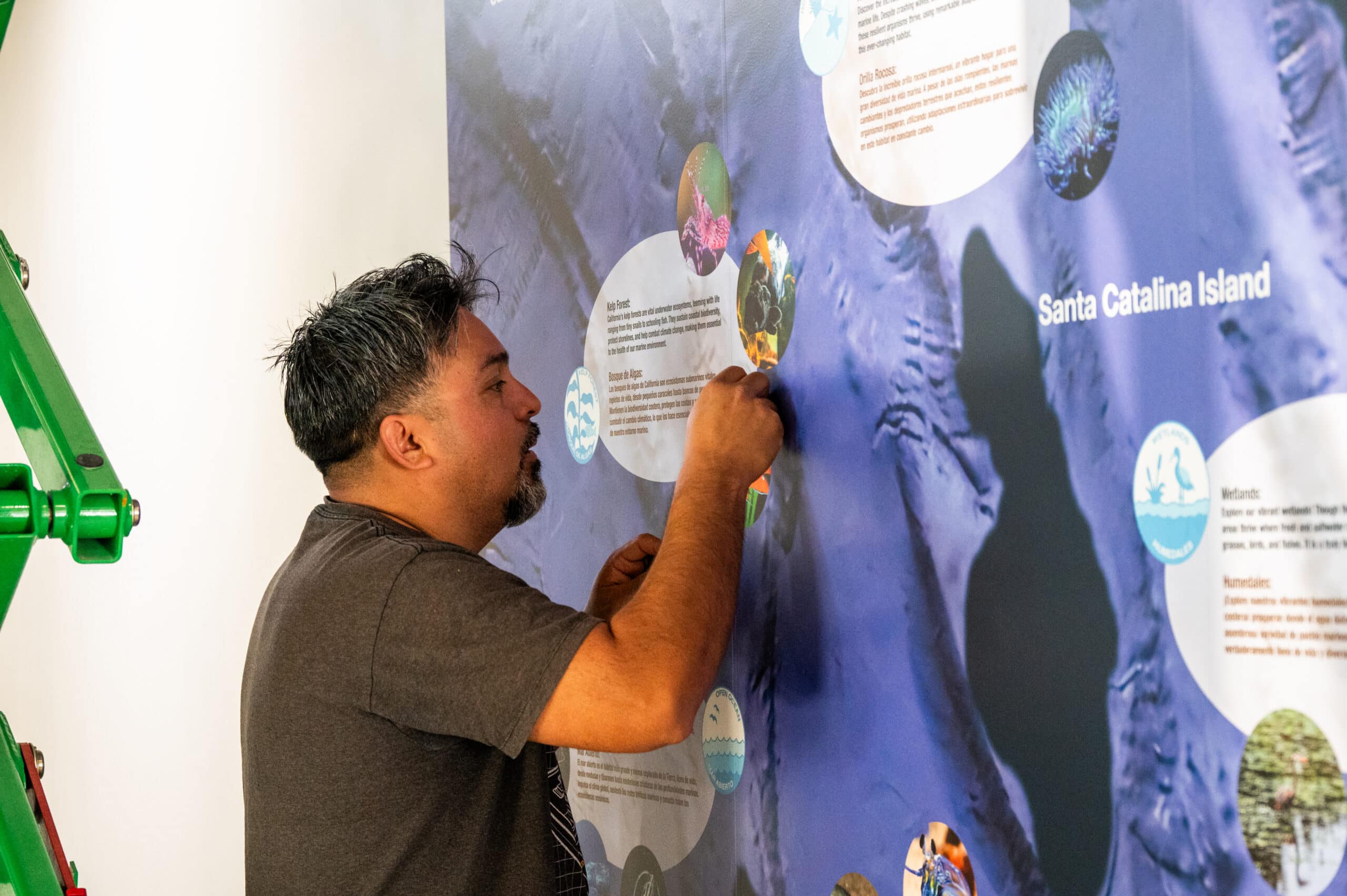
Cabrillo Marine Aquarium is celebrating its 90th anniversary in April, and everyone is invited to join the celebration!
What began in 1935 as a lifeguard’s collection of shells on the beach blossomed over the years—first into a museum at the Bathhouse and later into a complete aquarium designed by architect Frank Gehry.
To celebrate its latest milestone, the aquarium is unveiling an $8 million renovation that includes a new life support system designed to keep all the animals healthy and happy. The aquarium also took advantage of the 18-month shutdown of its Main Exhibit Hall to upgrade three new exhibits and build a new collections room.
On April 11, members of Friends of Cabrillo Marine Aquarium will get an exclusive sneak peek at the new offerings during an evening event. Starting at 5:30 p.m., attendees can enjoy behind-the-scenes tours, sample gourmet appetizers, watch a new video about the aquarium’s history, celebrate with birthday cake, and receive free commemorative pins. Stay for music from DJ Persona and enjoy food truck fare and adult beverages for purchase.
The new Welcome Exhibit highlights the aquarium’s location, where the cool waters of the north meet the warm waters of the south, creating a unique habitat for animals. They’ll also debut new bilingual signs and a new Grunion Exhibit. A new Jelly Lab will delight visitors with large tumbler tanks and visual effects.
A new Collections Room harkens back to the aquarium’s origins as a museum. Here, the aquarium will showcase its collection of rare species, including an angler fish, sea turtle shells, whale bones, and other treasures. A new window will host “Ask a Scientist” public programs.
Friends contributions funded the design of the new life support system, unlocking funding from the Department of Recreation and Parks and the Port of Los Angeles. Funding for the new exhibits came from Valero, Marathon, APM Terminals, and Phillips 66.
Want to attend the members-only event? Become a member or renew at friendsofcabrilloaquarium.org. Member benefits include free parking, tickets to grunion runs and Sea Scare, gala discounts, early class registration, a 15 percent discount at the gift shop, and discounts at zoos and aquariums nationwide. Membership helps keep the aquarium free; donations are encouraged but never required.
If you must miss the members-only event, join them for Earth Day on Saturday, April 18, from 10 a.m. to 5 p.m., when the aquarium throws open the doors for the big public reveal. Count on some fanfare from the San Pedro High School band, folklorico dancers, and lots of great presentations from environmental groups, plus a beach cleanup. spt
In San Pedro, we love a good small business story, especially when the owners are part of the community.
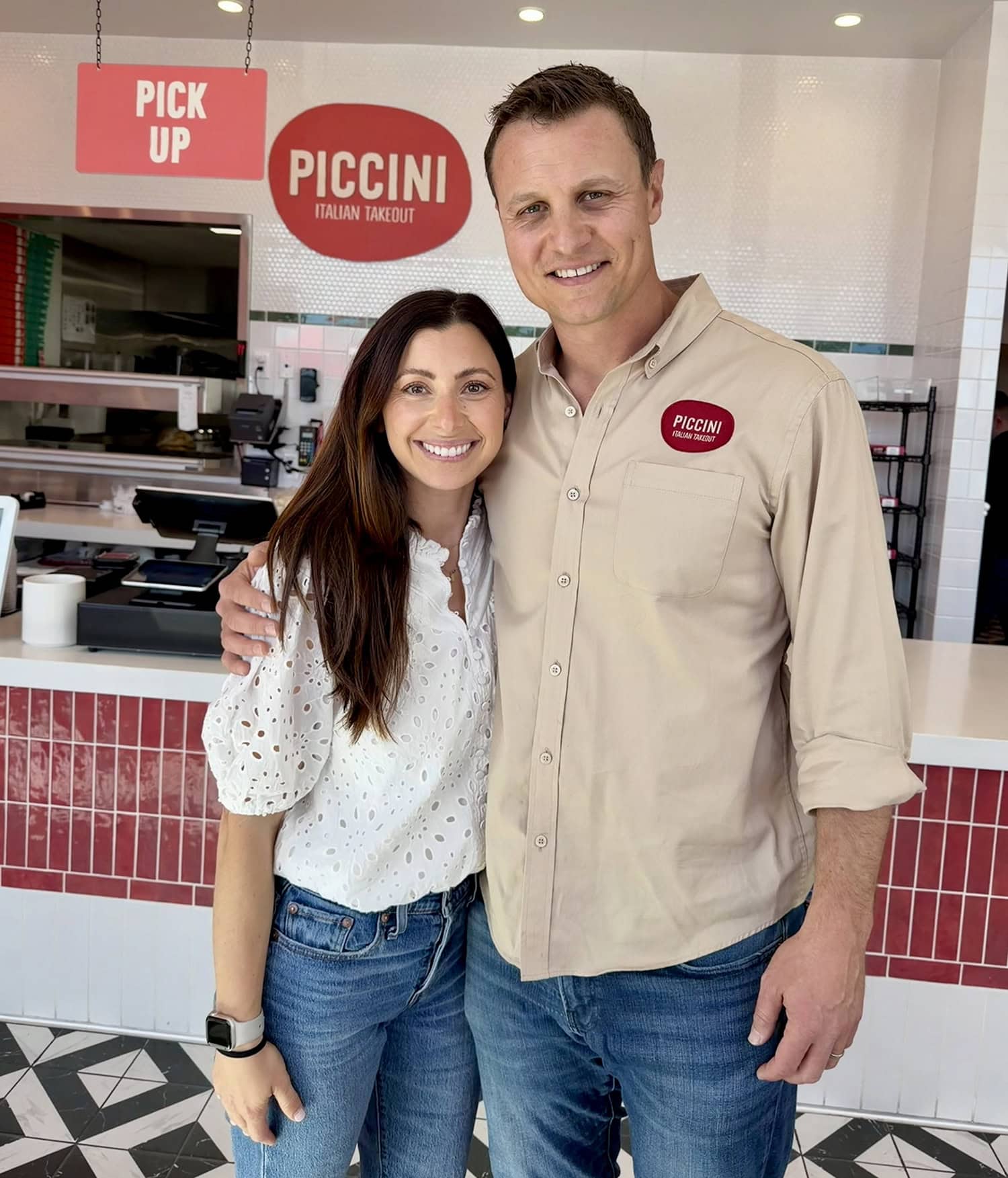
You may have noticed that Western Plaza on Western Avenue has undergone a much-needed renovation, and new businesses have moved in. One of the newcomers is Piccini Italian Takeout (29223 Western Ave.), owned by Vince and JoJo Giuliano, who opened it last fall.
Vince Giuliano was born and raised in the restaurant industry. His family owns South Bay’s long-standing Gaetano’s Restaurant and Giuliano’s. Although he went to college and worked in his field of study, he was drawn back to the family business, where he has since managed Gaetano’s alongside his mother. Along the way, he also married Giordana “JoJo” Giuliano, and they started a family.
Eventually, the Giulianos felt the pull to open their own fast casual eatery. Their concept is rooted in Vince Giuliano’s parents’ philosophy of serving “really good Italian food with hospitable service.” Piccini’s structure is a nod to Gaetano’s beginnings, a deli where customers order at the counter and take their food to go. Nevertheless, Piccini is built on Vince Giuliano’s experience working every role in his family’s business, as well as developing his cooking skills at a restaurant in Florence, coupled with JoJo Giuliano’s marketing background.
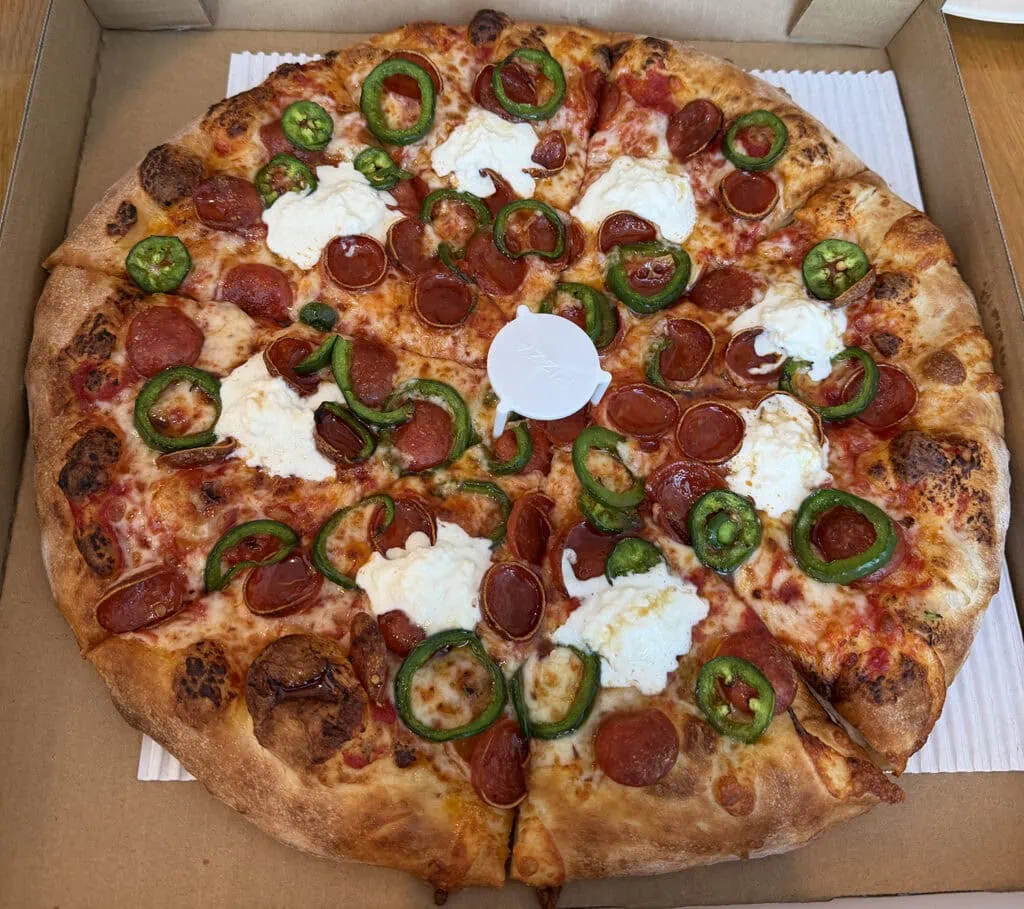
The Sweet Diavola pizza. (photo: Sanam Lamborn)
Finding a fitting name for their business proved surprisingly challenging. The Giulianos landed on Piccini, which means “little ones” in Italian. It reflects who they are—a young family with three small children. The name symbolizes their Italian-American heritage and legacy. “Gaetano’s was a tribute to [Vince’s] family and past, and Piccini is more our future and special to our family,” JoJo proudly shares.
Since opening their first Piccini in Torrance in 2022, the take-out model has worked to their advantage because of the ease, convenience, and the shift in customer trends brought upon by the pandemic. Running a take-out establishment is somewhat simpler than operating a full-service restaurant, but it still presents its own challenges. In particular, the food must maintain its quality and freshness over time until it is eaten. For example, their Fettucini Brasato is perfectly prepared, featuring tender braised meat and mushrooms in a flavorful tomato sauce that sticks beautifully to the al dente pasta.
The Giulianos are deeply connected to every aspect of their business because they see their food as an extension of themselves. Every decision is made with intention, from the vibrant appearance when customers arrive to the well-rounded menu designed to appeal to both adults and children. They also strongly believe in being part of the South Bay community they serve, as it is where they were raised and still live. Their dedicated staff, who are vital to the overall customer experience, includes both experienced employees and new hires, all of whom are locals.
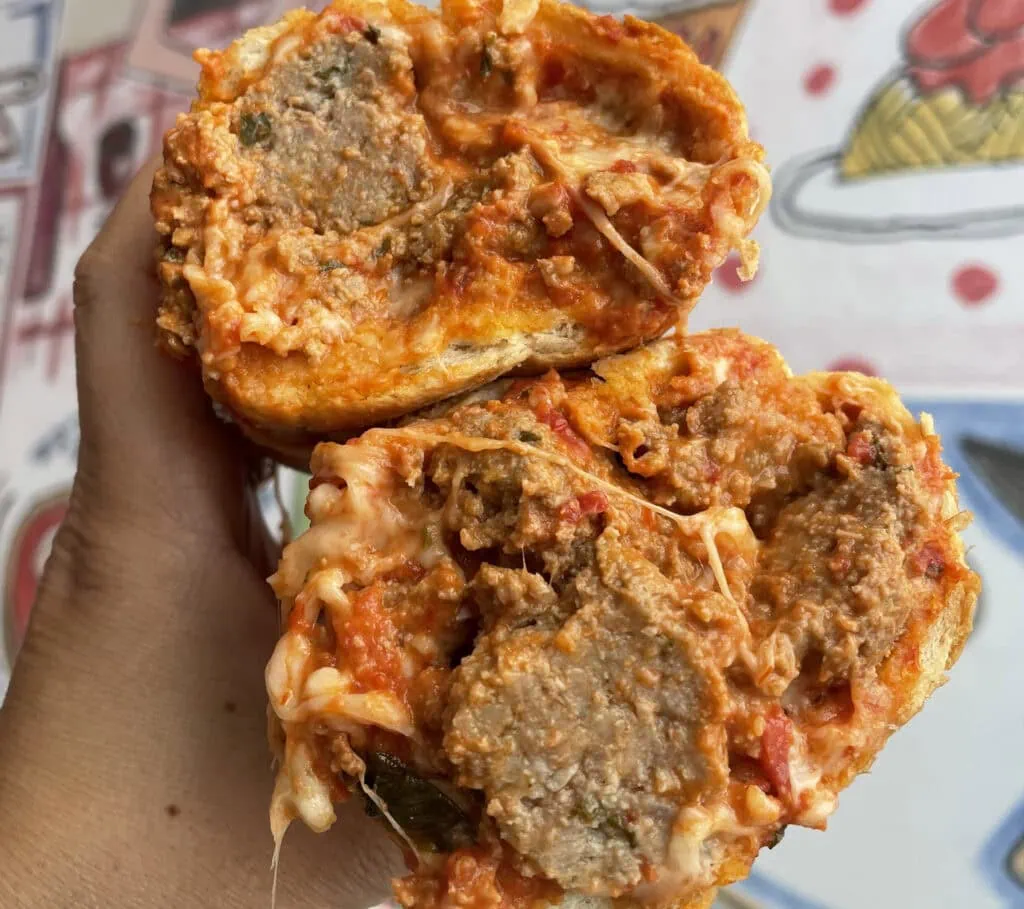
The menu features starters, sandwiches, pizza, pasta, and salads. Each month, there is a seasonal special. I have found several items on the menu that I really enjoy. The meatballs are a must-try, especially in a sandwich, as they are moist with a perfect blend of herbs, breadcrumbs, sauce, and a satisfying cheese pull. The chicken pesto is another flavor-packed sandwich that I highly recommend.
I am fond of a couple of pizzas that combine unique flavors that complement each other very well. The Sausage Hunter is white sauce-based, topped with fennel sausage, cremini mushrooms, and dollops of pesto. The Sweet Diavola is tomato sauce-based, topped with pepperoni, fresh slices of jalapeños, dollops of burrata, and drizzled with spicy honey.
Overall, Piccini offers generously sized, tasty takeout Italian food that is easy to order, thanks to the friendly and efficient staff. spt
Before you push through the doors of the Grand Annex on Sixth Street, before you find your seat or order your tiki drink, you have already entered the world of Josh Agle, better known as the artist “Shag.” Banners on the street showcase his characters. There is a red carpet. Performers outside greet you with the signature mid-century cool that has defined Shag’s art for three decades: elongated figures, knowing smiles, cocktails held at impossible angles. By the time you cross the threshold, you are already a suspect.
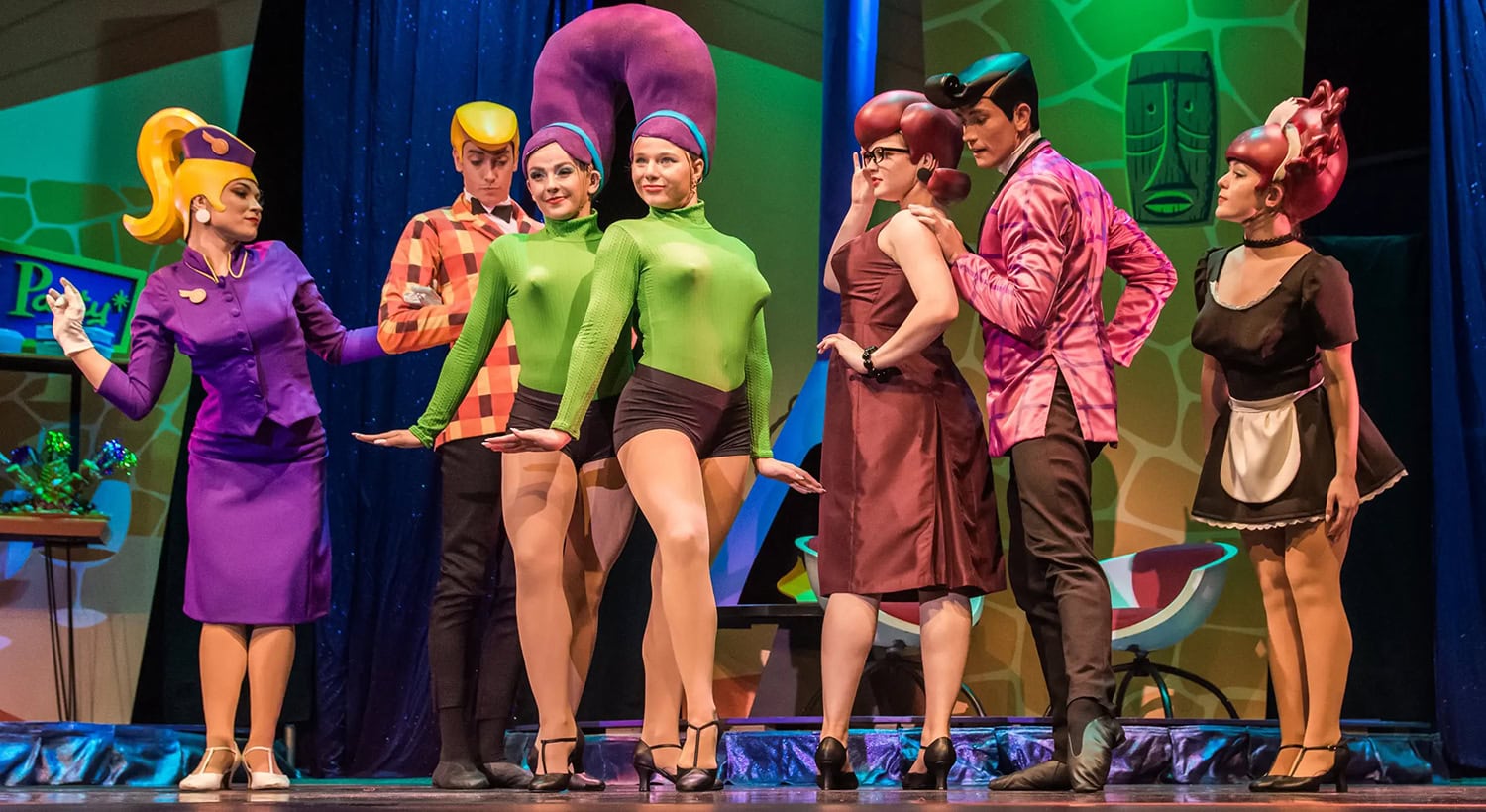
Characters from Shag with a Twist (l to r): Dodge, Kitty, The Foot, and The Maid. (art by Shag)
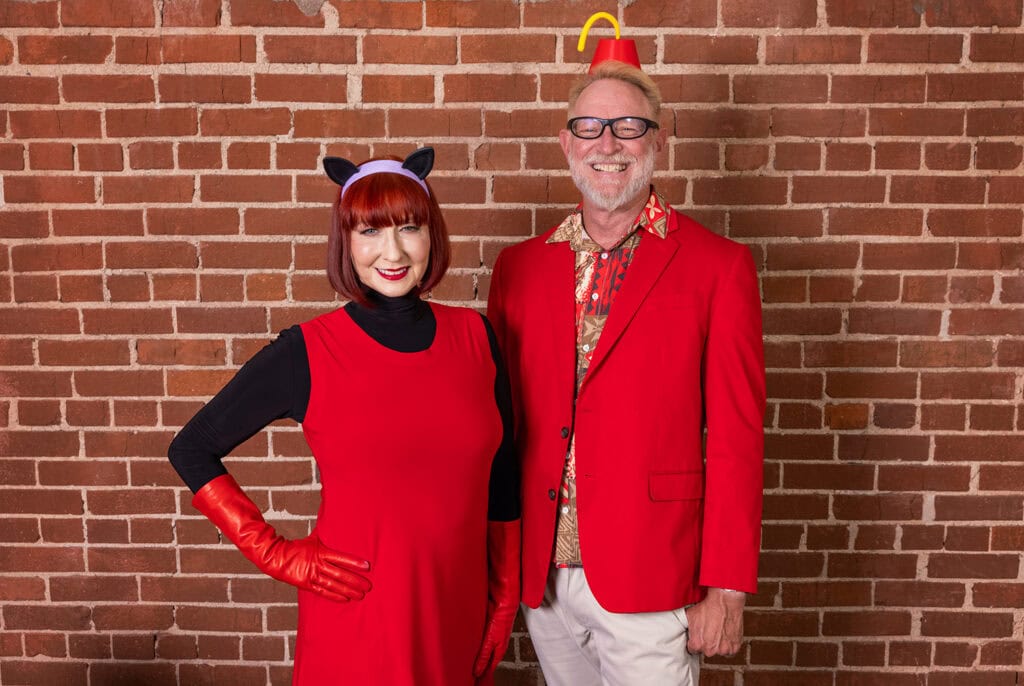
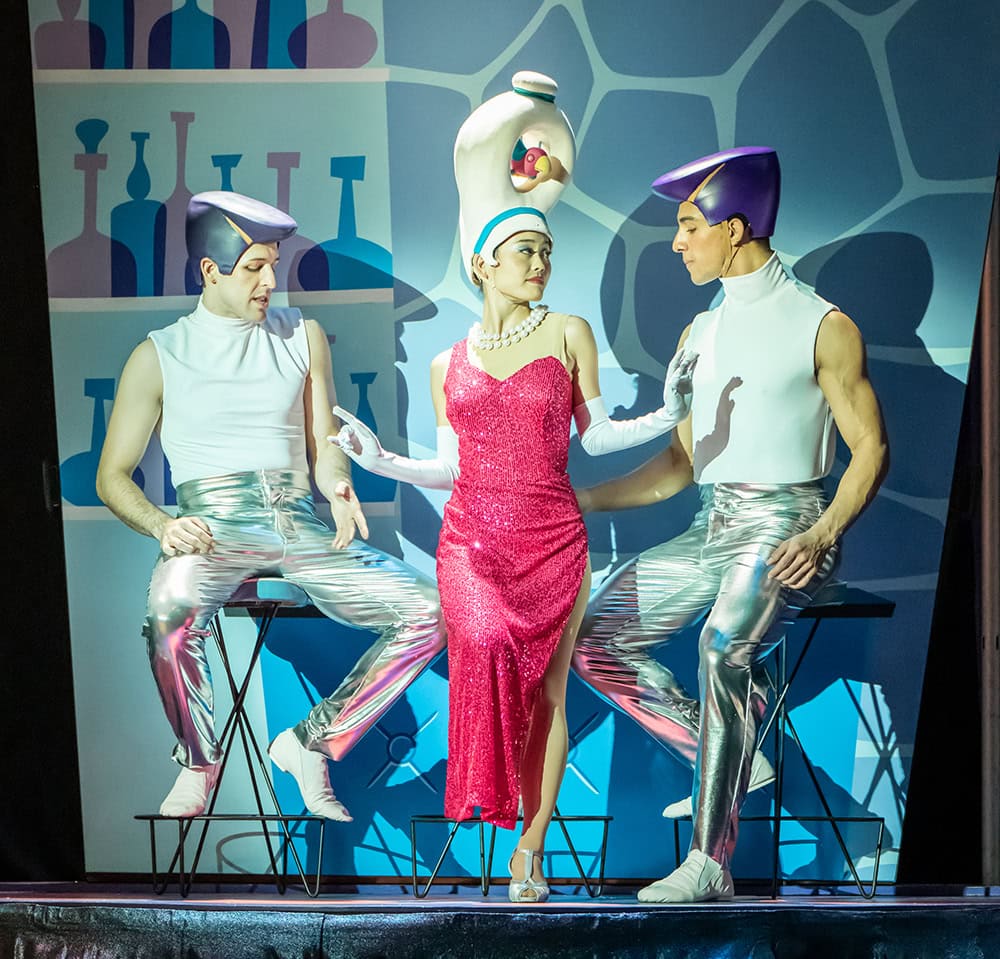
That last part is literal. Shag With a Twist, opening this month at the Grand Annex, is a murder-mystery musical, a 1960s Tupperware party gone wrong, investigated in retrospect by a pair of true-crime show hosts named Twinkie and Bun. The cast features a bumbling inspector, a fez-wearing monkey, and Kitty, a feline-styled seductress eager for everyone’s attention. Every badge, prop, and architectural beehive hairdo was designed by Shag himself, down to the toy mouse a character carries in one scene. During production, he received a message: ‘We need something to put Kitty in a playful mood, a toy mouse perhaps.’ He could, and he did.
Working out of Southern California since the 1990s, Shag built his following on images that evoke a memory of a world that never quite existed. His paintings are flat planes of saturated color, sharp lines, glamorous people in tiki bars and space-age lounges, all radiating a sophisticated melancholy that is easy to overlook because of their stunning surfaces.
His collectors are devoted. His imagery appears on everything from enamel pins to hotel lobbies. The style is so codified that it operates almost like a visual language: You recognize it immediately and understand, without explanation, exactly what kind of world you’re in.
Cindy Bradley and Shag. (photo: John Mattera Photography)
The challenge Cindy Bradley set for herself, roughly 22 years ago, was to make that world move.
Bradley is the founder and artistic director of San Pedro City Ballet, the same studio where, in the early 1990s, she discovered a young Misty Copeland at the Boys & Girls Club and offered her a scholarship. She encountered Shag’s work on a cocktail napkin at a Hollywood memorabilia show, and she describes the moment the way she describes touching Copeland’s foot: as a vision, something that came over her. She knew immediately she needed to bring it to life. She went to a packed gallery opening in Palm Springs, determined to meet him. The line wound around the building. She waited through dinner and came back to find it had grown. She talked her way past the door.
It took another six months of outreach to get Shag’s attention. What finally worked was a video of Bradley singing in her 1980s garage band, The Wigs, all surf guitar and ‘60s pop energy. Shag had been in a band himself back in the ‘80s. He said yes.
The show they built together opened in Los Angeles in 2005, ran for about 15 weeks, then moved to Las Vegas for nine months, then went quiet for years before being revived for Palm Springs’ Modernism Week. Now it has landed in San Pedro, in the neighborhood where Bradley has spent her career, in a room that turns out to be ideal for the experiment they’ve been running. With only about 150 seats, the Grand Annex is intimate enough that the aesthetic can saturate the space without overwhelming it. There is no safe distance between the audience and the stage. You are in the painting, not observing it.
Scene from Shag with a Twist. (photo: Jeanine Hill)
“It’s immersive,” Shag says, searching for the right framing. “People use the word retro, but to me the show exists in the past, the present, and the future.”
What he’s describing is the essential quality that makes his art, and this production, unusual. His paintings don’t depict a specific historical moment so much as a feeling about one: the eternal cocktail hour, the party that is always just beginning, suspended in amber and backlit in teal. Staging it creates a paradox. You can’t freeze time on a stage. Real performers breathe and sweat and generate genuine emotion. The question is whether the aesthetic can survive contact with all that sincerity.
Bradley’s answer, developed over two decades and multiple productions, seems to be: mostly yes, with adjustments. The show originally left its murder mystery deliberately oblique: Shag thought it was obvious who the killer was and was surprised when audiences did not find it quite so obvious. Subsequent productions added narrator characters, more dialogue, and a slightly clearer throughline. The party got better at explaining itself. “In the beginning,” Bradley recalls, “we had people coming back over and over trying to figure it out.” She does not say this as a complaint.
For Shag, the most rewarding aspect of the production has become its independence. “It’s a freestanding entity,” he says. “It’s a piece of pop culture with a life of its own.” He doesn’t see himself as the parent of the show, exactly. More like a distant relative, watching it thrive without him.
Scene from Shag with a Twist. (photo: Jeanine Hill)
For Bradley, the most rewarding thing is simpler. She wants to sit next to Shag and watch him watch the show. She wants to know he’s pleased.
San Pedro, too, seems pleased. Ticket sales are strong; people are coming from outside the neighborhood, which is exactly the point. Bradley is already discussing the possibility of bringing the show to West Harbor next year.
She discusses the after-party at The Whale & Ale, where the cast will join the audience, blurring the line between performers and attendees a bit more. She also mentions the nearby restaurants offering a 10 percent discount to ticket holders before the show: Compagnon Wine Bistro, The Whale & Ale, The Majestic, and San Pedro Brewing Company. Supported in part by a grant from Arts United San Pedro and the San Pedro Historic Waterfront District, the production feels like exactly the kind of thing the neighborhood has been working toward—a reason to visit downtown, dress up, and make a night of it.
It is, when you think about it, exactly what a Shag painting promises: the sensation of already belonging to the party. spt
Shag With a Twist runs Saturdays: April 11, May 30, and June 6, at the Grand Annex, 434 W. 6th Street, in Downtown San Pedro. Audiences are encouraged to dress tiki, pin-up, or 1960s mod. Click here for tickets and info, or visit their Instagram @shagwithatwistmusical.
Luis Correa vividly recalls the exact price he paid for his first two records: 25 cents each at the Vermont Avenue swap meet in 1978, when he was nine–“I Want You Back” by the Jackson 5 and El Chicano’s “In a Silent Way.” Then he bought the Madness greatest hits album, and that’s how all this madness began.
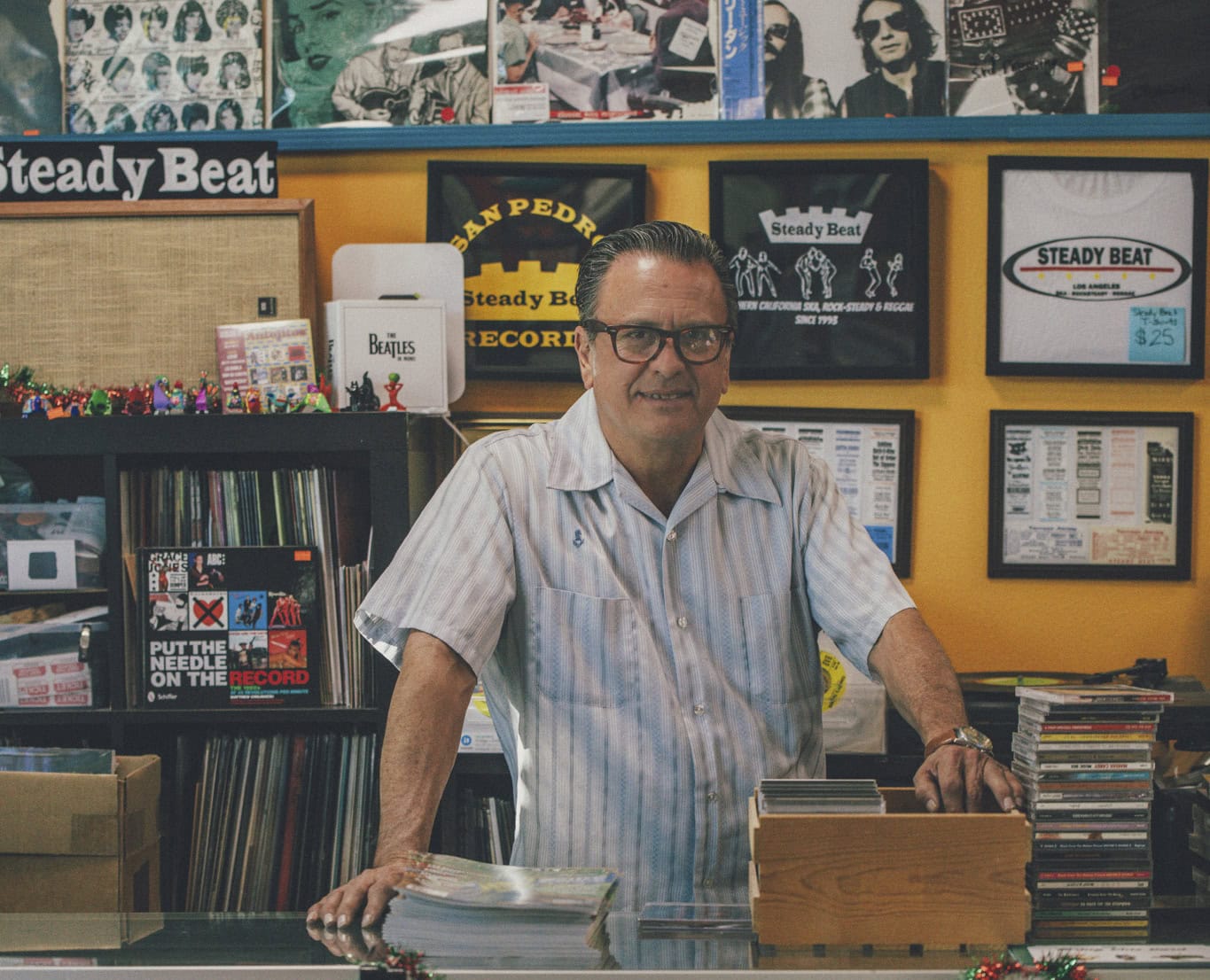
Five decades later, the madness continues. Correa owns Steady Beat Records on Seventh Street in Downtown San Pedro, where roughly 80,000 vinyl records (along with CDs, cassettes, t-shirts, posters, and other miscellany) demonstrate what’s possible when music fans reclaim control from the algorithms.
Twenty-five years ago, around the turn of the millennium, none of this seemed possible. In 1998, Correa was running Steady Beat Recordings, his own label focused on the local ska and reggae scene. His releases were sold in Tower Records. Distributors were moving product. Then Napster arrived, and within a year, everything imploded.
“Distributors started shutting down,” he recalls. “They started calling me saying, ‘Hey, listen, we’re not accepting any more vinyl. We’re sending back your stuff… and you owe us money.’”
Everybody in the vinyl business was out of a job. For years after, records became the domain of DJs and collectors who knew which shops still existed. Correa continued DJing, promoting shows, and staying involved in the music scene however he could. Then, around 2008, things started to change. Some music fans grew frustrated with iTunes’ licensing restrictions, realizing they didn’t actually own any of the music they had “bought,” so they started buying vinyl again. By the time Correa opened Steady Beat Records at its original Gaffey Street location in September 2021, the revival was complete.
Walk into Steady Beat, and the shop reveals Correa’s 50-year education. The Latin section—one of the best of its kind in Los Angeles—is renowned for its cumbia, salsa, boogaloo, Latin funk, and rare Colombian Fuentes pressings. The store also features plenty of jazz, soul, classic rock, punk, and even some niche subsections like drum and bass, jungle, 1990s house, trance, and freestyle, all meticulously organized for easy browsing.
Steady Beat Records. (photo: Aaron McKenzie)
“I was a DJ, so I couldn’t have all my stuff mixed up,” Correa explains. “When people come in, they don’t waste time. They’re like, ‘Where’s Run-D.M.C.?’ It’s right there, easy to find, so now they have time to keep looking for other stuff.”
This is Correa’s invisible labor: knowing what to stock in the main bins and what to exile to the $5 bargain boxes. After four years, Correa has learned that Fleetwood Mac flies out the door, as do The Police and The Cars. Neil Diamond, despite writing some of the greatest pop songs of the late 1960s, doesn’t move. “People don’t know he was a great songwriter. They just look at him as that 1980s Jazz Singer guy.”
Recordhounds are known for amassing huge collections. Asked about the difference between a collector and an enthusiast, Correa replies, “A collector will try to show somebody that he has, say, a sealed copy of some album,” but for Correa, the enthusiast; it’s about the music. “The music is there to be listened to. If I buy a record, I’m going to play the hell out of that record.”
The question, though, is: Why vinyl? In this age of streaming music—when the cost of listening to countless albums is near zero—why navigate what seems like a bulky inconvenience?
Correa admits that vinyl isn’t for everyone. “People who didn’t grow up with records are going to think, ‘Why do I have to do this? Why do I have to get up and change the record?’ But they also might discover that it brings them closer to what they’re hearing. Instead of just being some kind of background music, they’re actually looking at the liner notes and reading everything and actually choosing the next thing they’re going to listen to.”
“The most rewarding thing is introducing music to people,” Correa says. (photo: Aaron McKenzie)
Spotify is frictionless. Vinyl demands participation. One is convenient. The other is intentional.
A good day at Steady Beat means dollars through the till. An excellent day means someone walks in with a collection to sell. Correa celebrates not the immediate cash, but the long-game value.
“I don’t look at how much money came in,” Correa explains. “I look at how much value I’ve added to the store. With that collection, all of a sudden I’m adding value.”
The store survives because Correa knows what Steady Beat is and what it isn’t: In order to know what you are, you’ve got to know what you’re not. If you try to be for everyone, you end up being for no one. When someone asks for specialized soul outside his lane, Correa sends them across the bridges to shops in Long Beach. When someone walks in looking to sell 78s or Edison cylinders, he directs them across the street to the Grand Emporium.
The Downtown San Pedro record stores—Steady Beat, JDC, the Grand Emporium, PM Sounds—each operate in their own niche and constantly refer customers to one another. “The more the merrier,” Correa says.
When the lease ended and rent spiked at Correa’s original Gaffey Street location, a friend convinced him to move downtown. The decision was partly economic, partly personal. That was his chance to move the shop to another part of Los Angeles. But Correa grew up in San Pedro, knows the place, and loves it.
“This is my hometown. I know everything about this place,” he says. “I’d feel like a little outsider if my shop was somewhere else. But here? After I close, I’ll have a drink at Godmother’s and hang out. It’s my town.”
Every Wednesday, all the $5 records become $1. Every First Thursday, live bands and DJs take over the sidewalk outside. On any given Saturday, DJs drop by looking for rare Colombian cumbia. Newbies wander in asking for “psychedelic” without knowing if they mean Jimi Hendrix or Funkadelic. Collectors spend two hours digging, then buy one carefully selected record.
“The most rewarding thing is introducing music to people,” Correa says. “When someone comes in and I play them something and then they come back later saying, ‘Bro, I’ve been playing that nonstop’—that makes me happy. The reward is seeing people smile. It doesn’t cost me a thing to make people smile.”
One customer came through recently on a record store crawl from Santa Cruz to San Diego. Steady Beat was stop number 83 on his tour. Other customers stop in before catching a cruise to Mexico. Correa meets DWP meter readers, ship crew members, DJs, fanatics, and collectors hunting specific pressings.
“I meet people from all walks of life, but we have something in common: the music,” Correa says.
A friend told him before he opened his store: “You’ve been a DJ, a promoter, a band manager, a tour manager. You’ve done everything. This is the only thing you haven’t done.”
It took nearly 50 years to build the expertise that makes Steady Beat work. Every previous incarnation was preparation: knowing the music, understanding the scene, building relationships, developing taste.
After the Napster apocalypse, after watching the industry he’d built evaporate in 12 months, Correa opened a record store in his hometown and filled it with 80,000 records. Every one of them is there to be played. Every one is an argument for intentionality over ease, ownership over access, ritual over algorithm.
In an age when every song ever recorded lives in your pocket, Steady Beat Records shouldn’t exist. That it does—and that it thrives—suggests that there’s more to music than convenience. spt
Steady Beat Records is located at 336 W. 7th St. #101 in Downtown San Pedro. For more info, visit steadybeatrecords.com.
Did you know Los Angeles has its own art advocacy organization?
I’ve been a supporter and board member with Arts for LA since 2016, when I embarked on their ACTIVATE Cultural Policy Leadership Program.
Arts for LA is the region’s only unified voice for the arts—building and contributing to coalitions working to protect and promote creative career pathways, equitable arts education, arts funding, and affordable spaces for artists and arts organizations. They also teach effective civic engagement practices, produce arts education advocacy trainings, conduct convenings for the arts and cultural sectors, direct education efforts with policymakers, and sponsor in-person and online networking activities.
Arts for LA is now led by its third CEO, Gustavo Herrera, and I’ve had the privilege of watching it grow and expand its reach under his visionary leadership.
Gustavo was appointed as Arts for LA’s chief executive officer in December 2018. Prior to working with Arts for LA, he was the western regional director for Young Invincibles (YI), where he was responsible for leading YI’s California offices, including its West Coast expansion. As director, he set the strategic direction and advanced policy priorities for the region in healthcare, higher education, jobs, and civic engagement.
Prior to Young Invincibles, Gustavo was the executive director of LA Plaza de Cultura y Artes, overseeing the day-to-day operations of this county museum, including a master plan committee responsible for developing three acres of additional museum campus.
Gustavo holds an MBA from American Jewish University and a dual Bachelor of Arts in Global Studies, focusing on socio-politics and economics, as well as Art History from the University of California, Santa Barbara.
We asked Gustavo to share some insights about his background and his work with Arts for LA:
Can you give us a brief overview of Arts for LA’s major initiatives and projects?
Gustavo Herrera: Arts for LA is celebrating its 20-year anniversary in 2026. Twenty years of advocating to build a thriving and equitable arts, culture, and entertainment ecosystem in LA. This organization, powered by its network of 75,000 arts advocates and its membership, is working to increase public funding for the arts, create more jobs paying livable wages, provide broader access to affordable space for artists, and ensure that arts education is offered to every student across Los Angeles.
A major initiative of the organization is the Creative Jobs Collective, which aims to place 10,000 people into creative jobs by 2030. Arts for LA is actively organizing the arts, culture, and entertainment sectors in preparation for the 2028 Olympic and Paralympic Games.
What drew you to the Arts for LA job?
Herrera: I was 14 years old when I knew I wanted to be a museum director and build a career in the arts. It wasn’t until I graduated from UC Santa Barbara and started my first arts job search that I learned how difficult it can be to enter the field if you are not already “connected.” I learned how impossible it can be to try to build a career in the arts, and I became very interested in improving “access” to creative jobs and [creating] an “environment” for people, places, and institutions to thrive. Arts for LA became a vehicle where I can work on improving the environment through policy and budget advocacy.
What advice would you give 10-year-old Gustavo?
Herrera: Embrace your differences, it’s what makes you unique!
Who inspires you?
Herrera: Everyone around me! Arts advocates inspire me. I am always fascinated by people’s deep-rooted passion for art, culture, and creativity. People from all walks of life have their own personal connection to music, film, theater, a book, or a painting—running into their very core. My dad is one of those people with a deep-rooted story, which keeps him creating to this very day. Connecting to what people feel when they think about the arts is what inspires me the most. spt
Believe it or not, San Pedro is still a sandwich town.
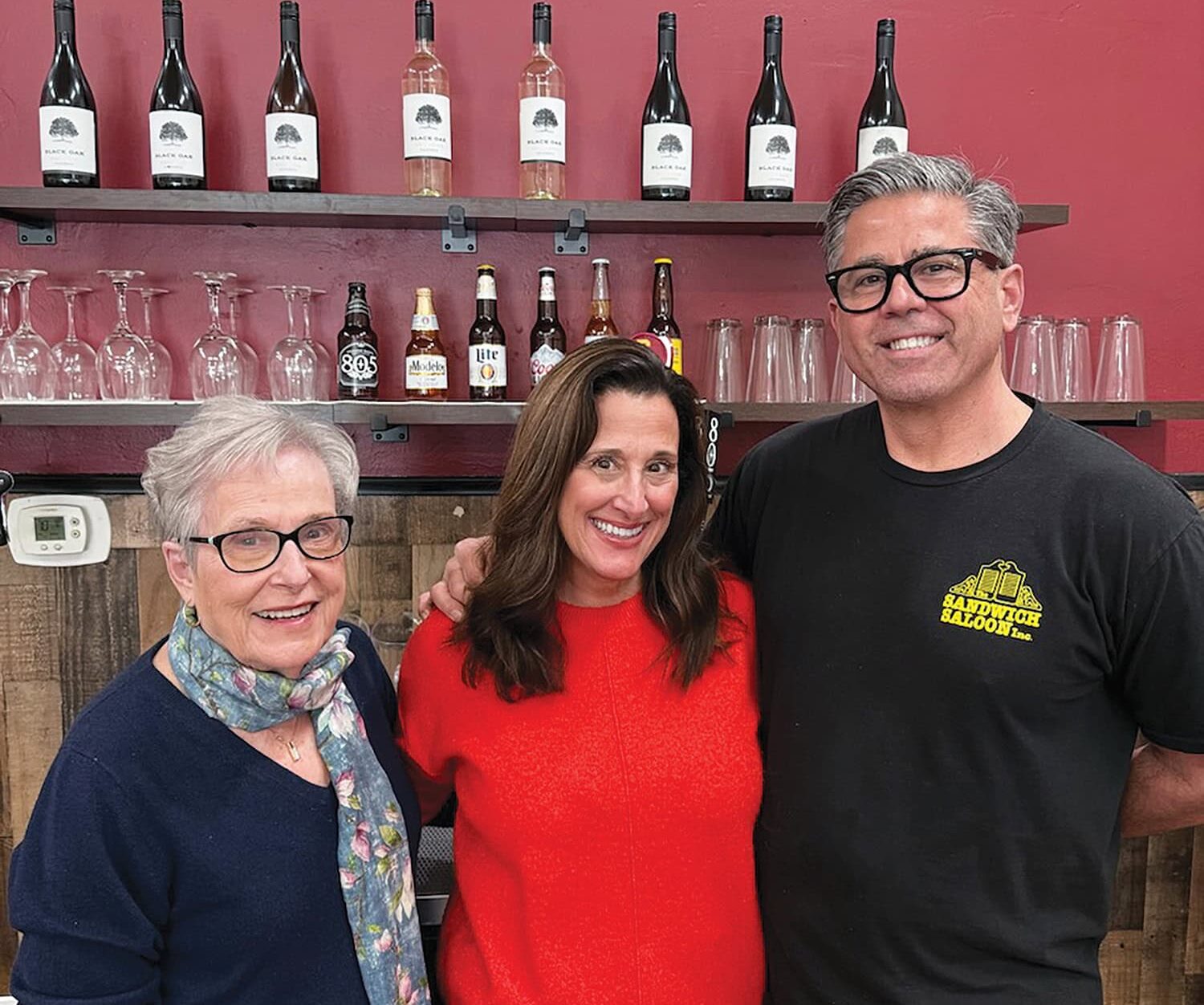
“Whether going to the Marina, the beach, or back to the office,” says John Philipopoulos, who has been behind the counter of the Sandwich Saloon since the mid-1980s, “a sandwich just hits the spot in a nostalgic and comforting way.”
Forty years in, Philipopoulos is still hitting the spot.
The Sandwich Saloon’s story began with a dream. Peter Skrumbis, a Westchester High School history teacher, and his wife Adrienne had always been drawn to small business ownership. In 1986, they heard through the San Pedro grapevine that a small sandwich shop on Gaffey, between 8th and 9th streets—open since 1977 and famous for its window painting of a cowboy clutching a sandwich and a pretty lady—was for sale.
“Peter wanted his own business,” Adrienne recalled, “and John, who was engaged to our daughter Nikki at the time, also wanted his own business. We had maturity on one side and a hard worker on the other.”
They reopened under new ownership on April 1, 1986. With just four employees and a modest menu, the family began expanding—homemade soups, fresh salads, upgraded sandwiches. In 2005, they doubled their space, added a grill, and introduced a full breakfast menu. Their Turkey, Avocado, Bacon and Cheese sandwich and burgers remain favorites today, along with the BBQ Smoked Beef Brisket Sandwich.
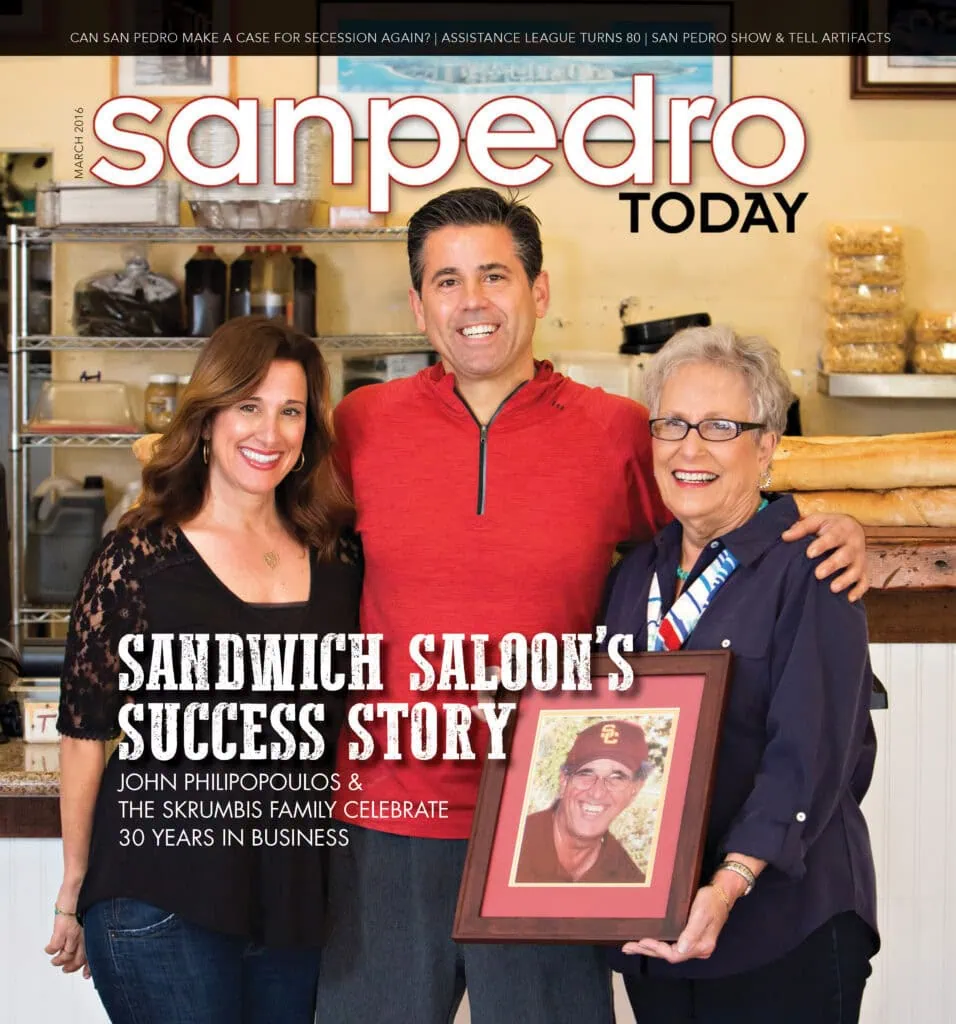
San Pedro Today cover from March 2016 celebrating the sandwich shop’s 30th anniversary. (photo: John Mattera Photography)
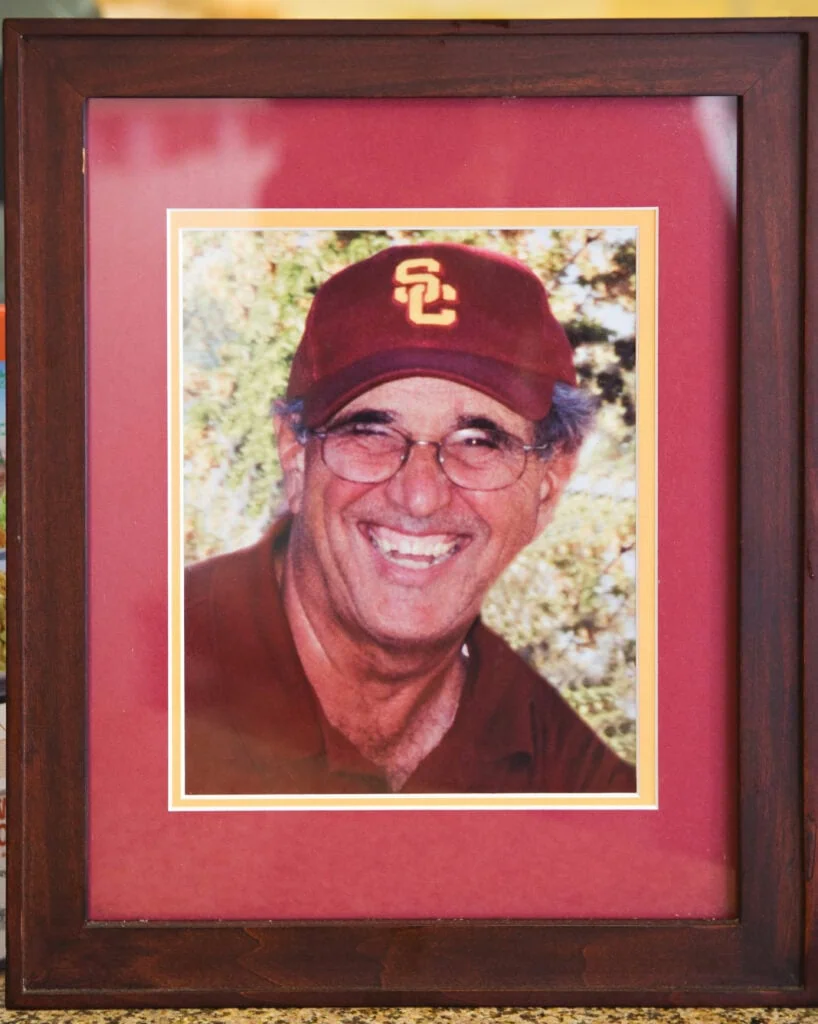
Peter Skrumbis passed away in 2012, but his legacy lives on. “It was a dream of my father-in-law Pete’s to have beer and wine,” says Philipopoulos, “so I couldn’t be happier than to realize that in his honor.” The shop now offers specials and happy hour Monday through Friday, 3–6 p.m.
The last decade brought new challenges. During the pandemic, the staff quickly shifted to pickup and delivery, and they’ve since upgraded their ordering platform and expanded the menu. Throughout it all, their connection to the community stayed strong.
“It feels surreal to celebrate 40 years,” says Philipopoulos. “The time has gone by so quickly, and I feel just as passionate about serving San Pedro as I did back in 1986.”
To mark the milestone on April 1, the shop will offer complimentary desserts and drinks with any purchase for dine-in customers from 10 a.m. to 8 p.m.
And their Chinese Chicken Salad dressing? Still a tightly held secret—known only to Philipopoulos, Adrienne (who still stops by to make sure her recipes are on point), and brother-in-law Steve. Her giant chocolate chip cookies, meanwhile, have become a town favorite all their own.
“My family and I want to thank the San Pedro community for your continued love and support throughout the years,” says Philipopoulos. “Cheers to 40 years!” spt
Sandwich Saloon is located at 813 S. Gaffey Street. For more info or to place an order, call (310) 548-5322 or visit sandwichsaloondeli.com.
One of the more enlightening things I’ve experienced about growing old is how your perspective on aging changes.
Remember in grade school, when your teachers seemed “so old?” And in your teens, when your grandparents appeared “ancient?”
If, however, you’re fortunate enough that the milestone years keep coming, they don’t seem as daunting as they once did. I think turning 75 remains a milestone—although to those who derisively call us “boomers,” it’s more of a millstone—but while I’m definitely on the tarmac, I’m hoping takeoff is delayed.
This is by way of wishing a happy 75th birthday to San Pedro High School’s class of 1969, in particular, my W’69 classmates, most of whom were born in late 1950 and early 1951. We’ve actually lived long enough to earn our class name, the Classics.
Personally, I feel a bit ambivalent about turning 75. On the upside, I’m healthy in mind and body (although some might argue with the mind part) and have plenty to be thankful for. However, there’s a significant downside to growing old in the town where you were born and raised: I’ve been to more funerals than I can count. I’ve also watched San Pedro change so much that I hardly recognize it anymore.
It’s why I might sound a little curmudgeonly sometimes (okay, a lot of times). Not the “Get off my lawn” kind of curmudgeon, but the “What the heck’s going on here?” kind.
This isn’t the San Pedro we boomers grew up in; it has changed so much and so fast, and when you have memories of what it used to be like, it’s hard not to feel upset.
As a counterpoint to that, I believe an even more meaningful milestone than turning 75 is my “rebirthday.” Fifty years ago in April, I became a born-again Christian. That made my recent completion of an advance directive, which deals with how my physical body will be handled when I near the end, much easier, knowing that my soul was taken care of in 1976.
Being a curmudgeon may upset some of my readers, but it won’t keep me out of heaven.
Now, more books by San Pedrans and about San Pedro, starting with memoirs that I somehow overlooked the first time around, and then some niche books. History and biography still to come.
Memoir
A Kind of Grace: The Autobiography of the World’s Greatest Female Athlete by Jackie Joyner-Kersee. Married her trainer, legendary San Pedro track coach Bobby Kersee.
Passing It On by Yuri Kochiyama. San Pedro native Mary Nakahara, interned during WWII, changed her name and became a world-famous civil rights activist and proponent of Malcolm X, Che Guevara, Fidel Castro, and Osama bin Laden.
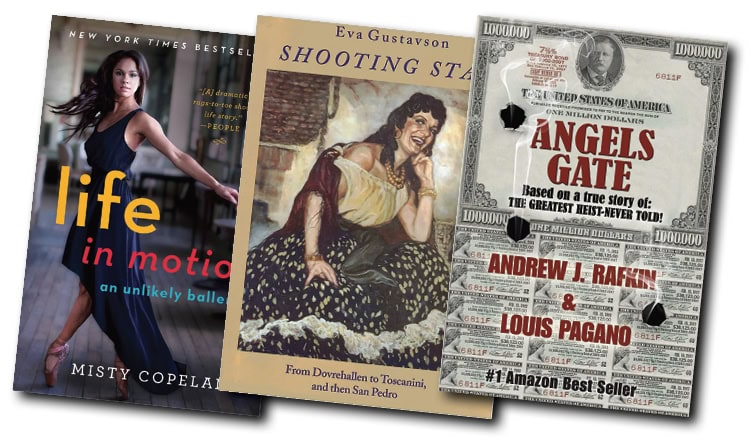
Life in Motion: An Unlikely Ballerina by Misty Copeland. Famed prima donna is also the subject of numerous books on Amazon.
Shooting Star: From Dovrehallen to Toscanini, and Then San Pedro by Eva Gustavson. The late San Pedran was an internationally renowned opera star in the ‘40s and ‘50s.
My Gates of Heaven by Betty C. Buzzini. San Pedro native (1924-2007) who loved her hometown.
And Then a Rainbow by Mili Shimonishi-Lamb. Story of a San Pedro woman interned during WWII and deported to Japan postwar and how she found her way back.
Red Sky Morning by Andrew J. Rafkin. San Pedro native, famed for his action-thriller novels, recalls his days as a young fisherman.
Educational/Nonfiction
Graziella’s Table: 52 Simply Delicious Italian Recipes from the Amalfi Coast in English and Italian by Graziella Coccia. San Pedro author.
Social Media and Criminal Justice by Nicholas P. Lovrich and Xiaochen Hu. San Pedro native Lovrich has co-edited or co-authored 13 books on criminal justice, political science, and public administration.
The Green-eyed Monster in a Maltese Suit by Mark Tiffany. The first in a trilogy of books for young adults by San Pedro writer using dogs to teach valuable life lessons.
The Unmaking of the President, 2020 by John O’Kane. The latest nonfiction book by San Pedro publisher of AMASS Magazine.
Forever Judo by Hayward Hiroshi Nishioka. San Pedro resident, world-renowned martial arts practitioner, has written five books on judo.
Angels Gate: Based on a True Story of the Greatest Heist Never Told! by Andrew J. Rafkin and Louis Pagano. A rare venture into nonfiction by Rafkin, one of San Pedro’s most famous authors. spt
She had a background in tailoring and would have me stand on a stool while she pinned my pants, usually inside out. I could never stand still and just wanted to go play. Even during my most stubborn teenage years, she kept mending my clothes. Later, after I moved away, I still brought things back for her to fix. In a quiet way, it kept us connected.
That might be why I’ve always been particular about tailoring since my mom passed away years ago. I tried a few places, but none felt right. Some were too industrial for me, and others not very friendly. Then I kept hearing the same name from people around town: Toyo.
I had passed her shop on 9th Street many times without ever realizing what was inside. Walking in felt like stepping into a busy workshop, a step back in time. Clothes and projects were everywhere, and Toyo was right in the middle of it all. Chizuko Cusumano, known as Toyo, is petite, beautiful, and highly skilled at what she does. She is direct and to the point. She will tell you if something is not worth fixing or if it is simple enough to handle yourself.
For more than 26 years, Toyo has been part of San Pedro. Her work is precise, her prices fair, and she has built long-standing relationships with her customers. She remembers people, their families, and their stories, creating strong connections with her customers.
“I was interested in fashion ever since I was little,” Toyo says. “I am so lucky I can do what I have a passion for as my job.”
Recently, customers noticed her shop was closed. Toyo, who is independent and proud by nature, had not shared that she is undergoing treatment for stage 4 liver cancer and has been unable to work. She did not want to burden anybody or ask for help.
During one of many visits to Providence Little Company of Mary Medical Center San Pedro ER, she ran into a familiar face. Natalie Vuoso, a nurse and longtime customer, immediately recognized her. Both Natalie and her mom have had many items altered and repaired by Toyo, including Vuoso’s first interview outfit for a nursing job 15 years ago. When Vuoso learned what was happening, she asked if she could help set up a GoFundMe. Toyo hesitated at first but eventually agreed.
The community’s response was swift. Friends, customers, and neighbors united to raise nearly $16,000, enabling Toyo to concentrate on her health and recovery. Thanks to San Pedro’s support, she no longer has to try to work when she feels tired and weak. Toyo is deeply grateful and moved by the kindness shown by our community.
“Toyo’s impact on our town made the word spread so fast. Kindness leaves an impact on people,” says Vuoso. “The ER in San Pedro genuinely cares about the community we serve, and that’s something really special about this town.”
Toyo appreciates the close-knit San Pedro community that has supported her so much. She is looking to move into a ground-floor apartment to make things easier during this time, so she won’t have to climb stairs like at her current place. As she keeps up with her treatment, customers in San Pedro and beyond continue to support her.
In San Pedro, places like Toyo’s are part of the neighborhood’s fabric. When someone who has quietly supported many people needs help, the community comes together.
If you’ve ever wondered how major decisions are made in Los Angeles, the answer isn’t always found under the bright lights of City Hall or in the headlines of a council vote.
Often, the real work—shaping, debating, and refining—takes place within a network of boards and commissions that operate openly throughout the city.
Unlike the neighborhood councils that serve an important advisory role for decision makers, commissions vote and take action within the large city departments as governing bodies. And here’s the part that should matter to all of us in San Pedro: the city commissions are public venues where our voices are heard, and we have neighbors with seats at that table.
The City of Los Angeles’ commission system has a history spanning over a century. The 2000 Los Angeles Charter Reform—which included our county supervisor, Janice Hahn, as a key contributor—expanded the community checks and balances within a city that was rapidly growing.
Instead of concentrating power in a single office, the city established boards and commissions made up of appointed residents. Our mayor, Karen Bass, makes appointments, and the 15-member City Council confirms the nominees. These commissions are designed to bring expertise, transparency, and public accountability to areas such as policing, planning, ports, and public works.
Today, more than 50 active commissions operate across Los Angeles. While each has a specific purpose, they all share one common trait: They influence decisions that shape our neighborhoods long before those decisions become law.
For a community like San Pedro, which is geographically distant from Downtown Los Angeles yet economically and culturally vital, the commission system isn’t just a bureaucratic structure. It’s access. It’s representation. It’s leverage. Currently, San Pedro is well represented by several local residents serving on key City of Los Angeles commissions.
Yvette Smith and Theresa Sardisco serve on the Animal Services Commission. San Pedro loves our pets, and these commissioners help guide policies that affect everything from shelter operations to pet adoption programs across the city.
Congratulations to Yolanda Regalado, owner of Sirens Java & Tea, on her recent appointment to the Fire Commission. Given the impacts of climate change and the recent fires that affected our neighbors to the north, the Fire Commission holds a vital role in overseeing the Los Angeles Fire Department, influencing emergency response, staffing, and community safety initiatives.
Yolanda’s husband, Ray Regalado, is a member of the Transportation Commission, which oversees everything from street improvements to traffic flow and mobility planning—this commission influences how San Pedrans get around the city every day.
Doug Epperhart serves on the Neighborhood Commission. Dedicated to boosting community involvement and empowering local voices, this commission supports the neighborhood councils that provide residents a direct connection to city government.
Amber Sheikh, John Bagakis, Mona Sutton, and Joe Gatlin all serve on the Harbor Area Planning Commission. This group may have one of the most direct impacts on San Pedro’s future. The Harbor Area Planning Commission reviews and makes decisions on development projects, land use, and zoning. These issues directly affect housing, business growth, and the character of our community.
And I, Lee Williams, have the honor of serving on the Harbor Commission at the Port of Los Angeles. The Harbor Commission oversees operations at the port, guiding everything from environmental initiatives to major development projects that impact the entire region. What most people don’t realize is that the port doesn’t run on your tax dollars, nor does our $1.7 billion budget feed into the city’s general fund. The port invests 10 percent of its operating income here in San Pedro and Wilmington. That’s $400 million to date, with another $400 million planned over the next decade. I believe the port has an important mission: to continue being the economic engine of our region while operating more cleanly and creating more jobs that support residents, small businesses, and improve the quality of life for all San Pedrans.
Commissioners are unpaid volunteers who approve projects, establish policies, and shape recommendations that ultimately reach the City Council. Many of us dedicate 5, 10, or 20 hours a week in service to the city, and we do so with pride. If you’re interested in any of these areas of city government, I encourage you to attend commission meetings, either in person or online. For more details, visit lacity.gov/government/boards-commissions.
Commissioners serve at the pleasure of the mayor, and she has the authority to appoint and remove commissioners at her discretion. San Pedro is well represented, and our Councilmember Tim McOsker is working with Mayor Bass to see how we can secure more seats at more tables for San Pedro and the rest of the One Five. spt
Let me guess. When someone mentions the San Pedro Chamber of Commerce, you’re not entirely sure what we do.
Maybe you picture a few luncheons, some handshakes, a plaque or two—and that’s about it. I get it. That’s exactly why I’m excited to launch this new column in San Pedro Today. Each month, I’ll highlight a different program or initiative so you can see the full picture of what’s happening right here in your community.
The San Pedro Chamber of Commerce is a 120-year-old nonprofit with one mission: to make San Pedro a better place to live, work, and visit by strengthening our business community. We represent over 500 members, including small businesses, nonprofits, and corporations, and we are an integral part of the connective tissue of this community. Every day, we work behind the scenes to ensure San Pedro remains a place where businesses can thrive, residents enjoy a good quality of life, and our community continues to grow into something we can all be proud of.
So, what do we actually do? Let me break it down.
We advocate for you. Our Economic Development & Policy Committee meets the second Tuesday of each month to tackle the issues that matter most to San Pedro. When decisions are made at the city, county, and state levels—from zoning changes and infrastructure projects to economic development initiatives—the San Pedro Chamber is present. We show up, we speak up, and we make sure San Pedro’s voice is heard. Policy can feel distant and complicated, but these decisions directly impact your business, your employees, and your neighborhood. We help bridge that gap.
We connect you. One of the most powerful things you can do is build genuine relationships with people who are equally invested in this community. Our Breakfast with the Chamber, Business Expo, Restaurant of the Month, mixers, and signature programs aren’t just social events, they are strategic opportunities. Come prepared to meet elected officials, find your next client, collaborator, or mentor. Business gets done through relationships, and we create the environment where those relationships are built. Next event: Join us for the State of the County with Supervisor Janice Hahn on April 30 at 11:30 a.m. at CRAFTED at the Port of Los Angeles.
We educate and empower. Through programs like Chamber 101, the Nonprofit Collaborative, the Small Business Academy, and our partnership with the BusinessSource Center, we equip business owners, nonprofit leaders, and aspiring entrepreneurs with the tools they need to succeed. Whether you’re new to San Pedro or have been here for decades, there’s always something to learn, a resource to access, or a program that can help give you a real competitive edge.
We celebrate and promote our community. San Pedro has a heart you don’t find everywhere, and we work hard to shine a spotlight on it. Did you know the Chamber has produced the San Pedro Spirit of the Holidays Parade for over 45 years? From recognizing outstanding businesses and community leaders to driving foot traffic and visibility for our members, we are San Pedro’s biggest cheerleaders. When San Pedro wins, we all win.
We bring people together. Beyond business, the Chamber plays a vital role in the social fabric of this community. We facilitate conversations, build coalitions, and remind everyone—from the small shop owner on Sixth Street to our major employers—that we are much stronger together than we are alone.
None of this happens without community. The Chamber is only as strong as the people behind it. Our 500 members and Chamber Ambassadors make it possible for us to do this work at the highest level. We are deeply committed to San Pedro’s future, and we want you to be part of it.
If you’re curious about getting involved, I personally invite you to take the next step. Join a free Chamber 101 session held the second Tuesday of each month at 9 a.m. Attend an event or volunteer with us at LA Fleet Week or Cars and Stripes. Schedule a meeting with us. See firsthand what this community looks like when it truly shows up for itself.
San Pedro has always punched above its weight. The Chamber is here to make sure we keep doing exactly that. spt
To learn more about the San Pedro Chamber of Commerce, visit sanpedrochamber.com or call (310) 832-7272.
San Pedro has always been a community that cares about service to this country and supporting our veterans.
That spirit is exactly why a few years ago, my office partnered with Volunteers of America to purchase the old Best Western on 1st and Gaffey and turn it into something our Harbor Area desperately needed: a place where veterans who have been sleeping on our streets can find not just shelter, but stability, dignity, and a path forward.
Today, that vision is a reality. Veterans who walk through the doors find more than a bed for the night—they find a support system, new friendships, and the resources they need to create a new future for themselves.
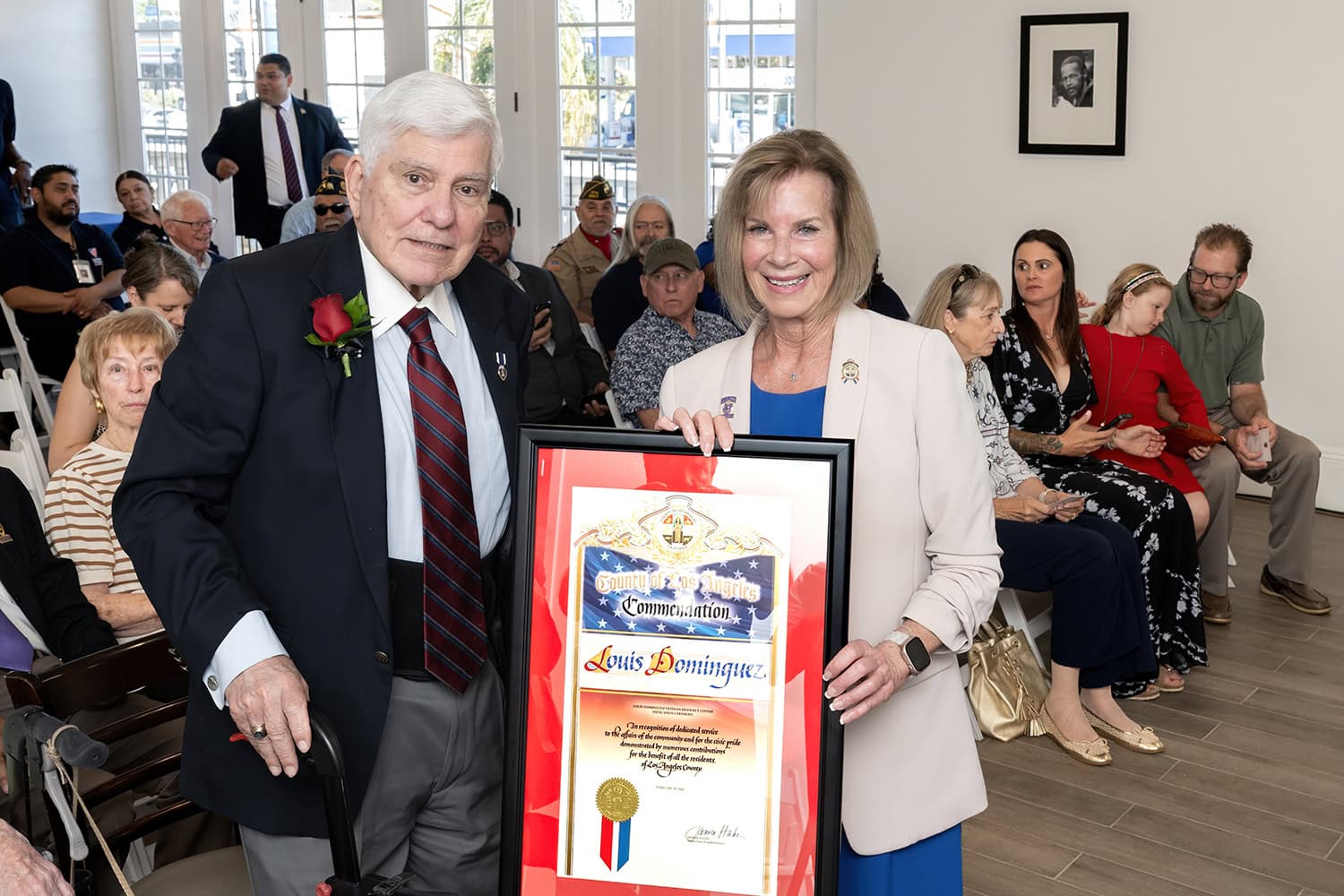
And when the time came to name the center, one name immediately came to mind—my friend Louis Dominguez.
Louis grew up here in the Harbor Area. As a young man, he enlisted in the Army and deployed to Vietnam as a forward observer. While serving, he was seriously wounded by machine-gun fire in an attack that killed his best friend. He spent nine months in army hospitals and never regained full use of his legs. For his bravery, he earned a Purple Heart, a Bronze Star with Valor, and several other military decorations.
But Louis’s service didn’t end when he returned home. In many ways, it was just beginning.
He went back to school, earned his degrees, and built a career in public service—working for Assemblyman Vincent Thomas and Mayor Tom Bradley.
Louis and I even ran for the same City Council seat back in 1993. We both lost to our friend Rudy Svorinich, but Louis remained as committed as ever to serving his community.
Over the years, he has worn many hats in San Pedro. He has helped fellow veterans through the American Legion. He has volunteered as a docent aboard the USS Iowa. He spent years teaching seniors computer skills at Harbor Community Adult School. Today, he continues his public service as my appointee to the Los Angeles County Commission for Older Adults.
And of course, there is one San Pedro landmark that will always bear Louis’s fingerprints.
For 17 years, he led the effort to finally light the Vincent Thomas Bridge. Today, the iconic blue lights of our bridge have become a symbol of pride for the Harbor Area and a beautiful welcome to every ship entering our port.
I was proud to work alongside Louis in that effort when I finally was elected to City Council, and I learned something important about him along the way: When he commits to something, he sees it through.
Louis Dominguez embodies what our veterans deserve—not just thanks but action. Not just ceremonies but meaningful investments in their futures. That’s why it felt so appropriate to name our veterans resource center here in San Pedro after him.
Last month, we hosted a ceremony officially dedicating the Louis Dominguez Veteran Resource Center. Congresswoman Nanette Barragan joined us, and we unveiled a plaque to Louis in front of a room filled with his beautiful family, friends, and local veterans.
San Pedro’s own Louis Dominguez Veteran Resource Center bears the name of someone who not only served his country in war but also dedicated decades to strengthening the community he calls home.
San Pedro is fortunate to have people like Louis Dominguez. His is a legacy worth honoring. spt
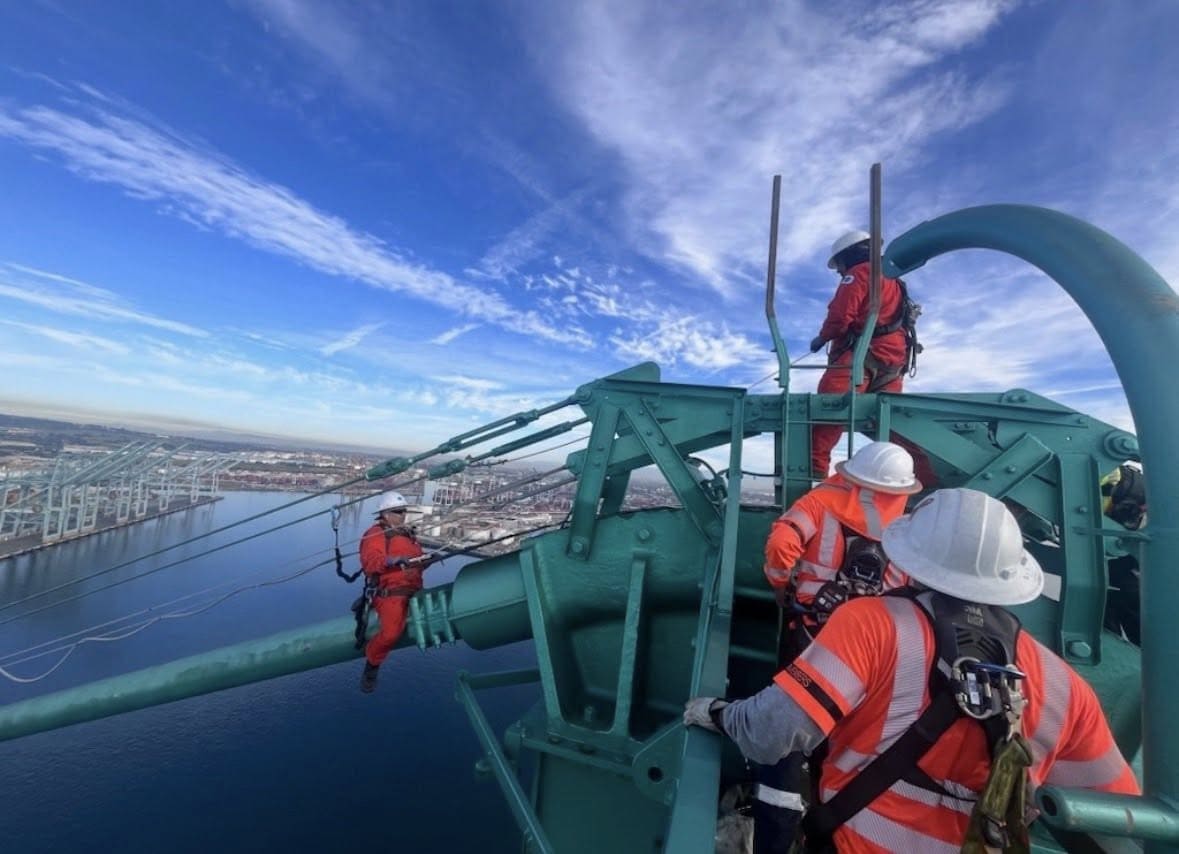
Drivers crossing the Vincent Thomas Bridge this weekend should plan for minor delays. Caltrans has scheduled daytime single-lane closures on the span Saturday, March 7, from 6 a.m. to 2 p.m. for maintenance work on the bridge’s north tower.
The closure affects the northbound right-hand lane between Harbor Boulevard and Ferry Street. Traffic will continue moving in both directions throughout the work window.
Caltrans notes the schedule is subject to change due to weather or operational conditions. Motorists can check real-time traffic conditions at QuickMap before heading out. spt
A half-million-dollar gift from the Timken Foundation is giving Battleship IOWA’s education mission a significant boost, and could put San Pedro’s iconic warship at the center of a new pipeline for maritime engineers.
Pacific Battleship Center announced the $500,000 grant this week, earmarked for the development of an Engineering Career Track within the National Museum of the Surface Navy experience aboard the ship. The track will use immersive, interactive environments to connect visitors—particularly students—with the engineering systems that powered the Iowa-class battleship and that continue to drive modern naval vessels.
The Timken Foundation’s investment isn’t purely philanthropic coincidence. The Timken Company has supplied bearings to the U.S. Navy for generations and today manufactures the majority of reduction gears used in modern naval shipbuilding. Though the foundation operates independently from the company, the shared legacy of naval engineering gives the gift a certain resonance. “The engineering career track project developed at the Pacific Battleship Center is consistent with that commitment,” foundation president Robert Timken said in a statement, “and also allows the foundation to honor those who served aboard the USS Iowa during the ship’s commission.”
The full project carries a price tag of roughly $1.4 million. Timken’s gift represents the lead funding needed to get it moving, with Pacific Battleship Center now actively seeking additional partners to close the gap. Completion is targeted for the end of 2026.
For San Pedro, the stakes extend beyond the museum experience. The battleship welcomes more than 300,000 visitors annually, and the new track is designed specifically to spark interest in engineering among young people, a goal that aligns with broader regional efforts to build out the Harbor Area’s maritime workforce. The Timken Foundation has supported the Pacific Batteship Center with roughly $100,000 in prior grants since 2019; this gift represents a substantial escalation in that relationship.
More information on educational programming aboard Battleship IOWA is available at pacificbattleship.com. spt
In February 1980, President Jimmy Carter issued a presidential proclamation declaring the week of March 8, 1980, as National Women’s History Week.
Diana Nave
For decades, the San Pedro Chamber of Commerce has hosted an annual Women’s History Month event each March to honor local women who make significant contributions to the community in business, the arts, health, and government. The tradition highlights diverse local leaders, with a 2026 celebration planned for March 26 at the Dalmatian-American Club.
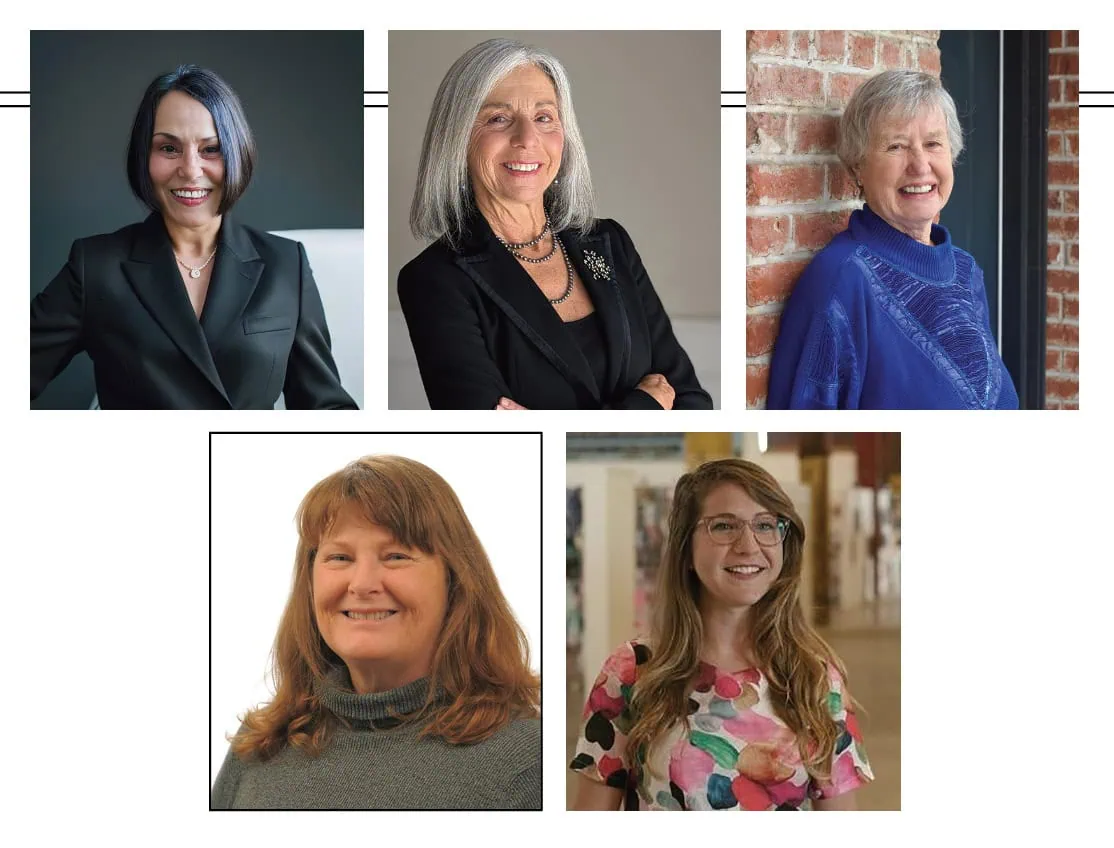
The event serves as a key community networking opportunity to spotlight women leaders in the Harbor Area, and the following incredible, exceptional women will be honored at the March celebration:
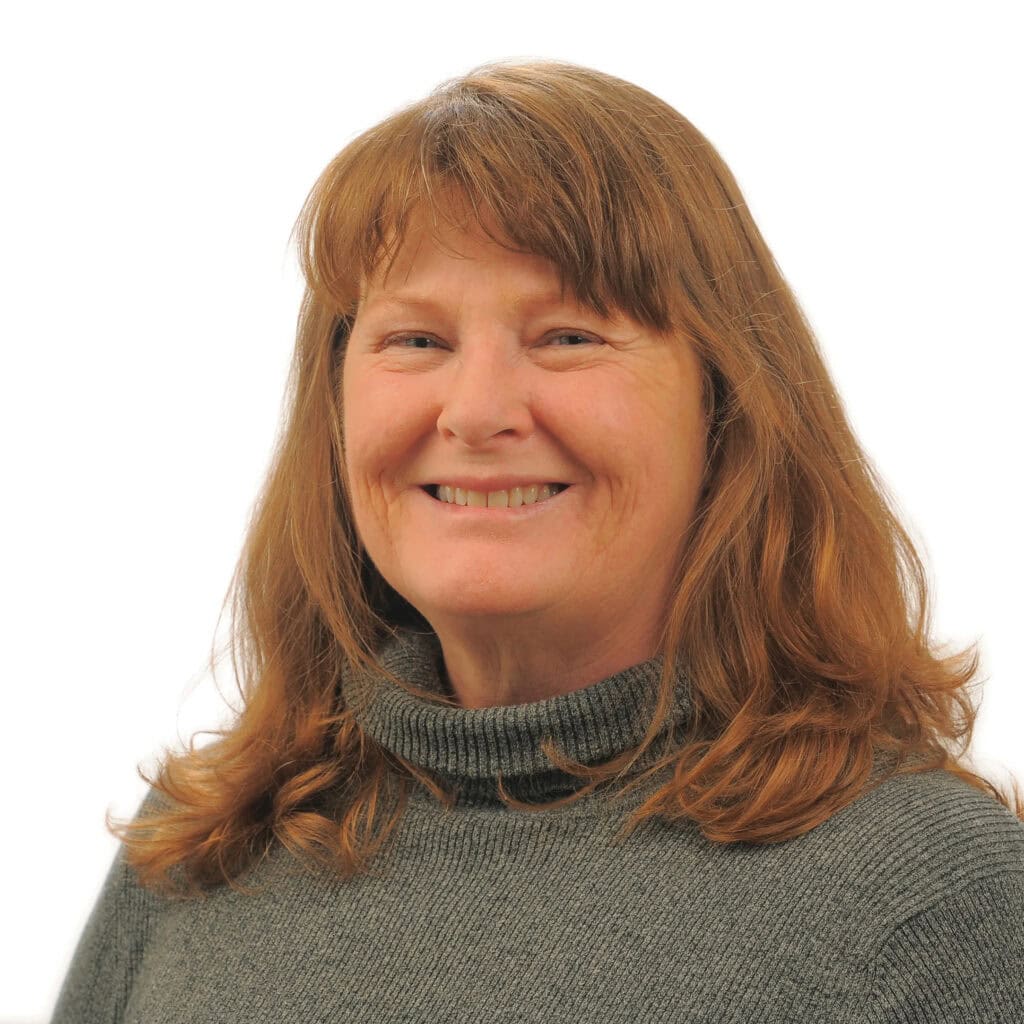
The Legacy Award goes to Diana Nave, a community volunteer with over 25 years of service. Diana has left an indelible mark on her community of San Pedro. She’s a past president of the NWSPNC and was instrumental in the formation of the Neighborhood Council Joint Planning and Land Use Committee. Diana is one of the driving forces behind Friends of Peck Park Canyon, a grassroots volunteer group collaborating with Los Angeles Recreation and Parks to maintain the canyon’s 30-acre natural area.
Lindsay Sochar
Diana has also championed recreational opportunities for San Pedro’s youth, including backing the construction of an $800,000 skate plaza at Peck Park. Whether she is testifying before city commissions, leading a morning hike through the canyon, or organizing a volunteer weeding day in the native garden, Diana Nave exemplifies the power of sustained grassroots engagement. Her decades of service have helped shape a stronger, greener, and more connected Northwest San Pedro.
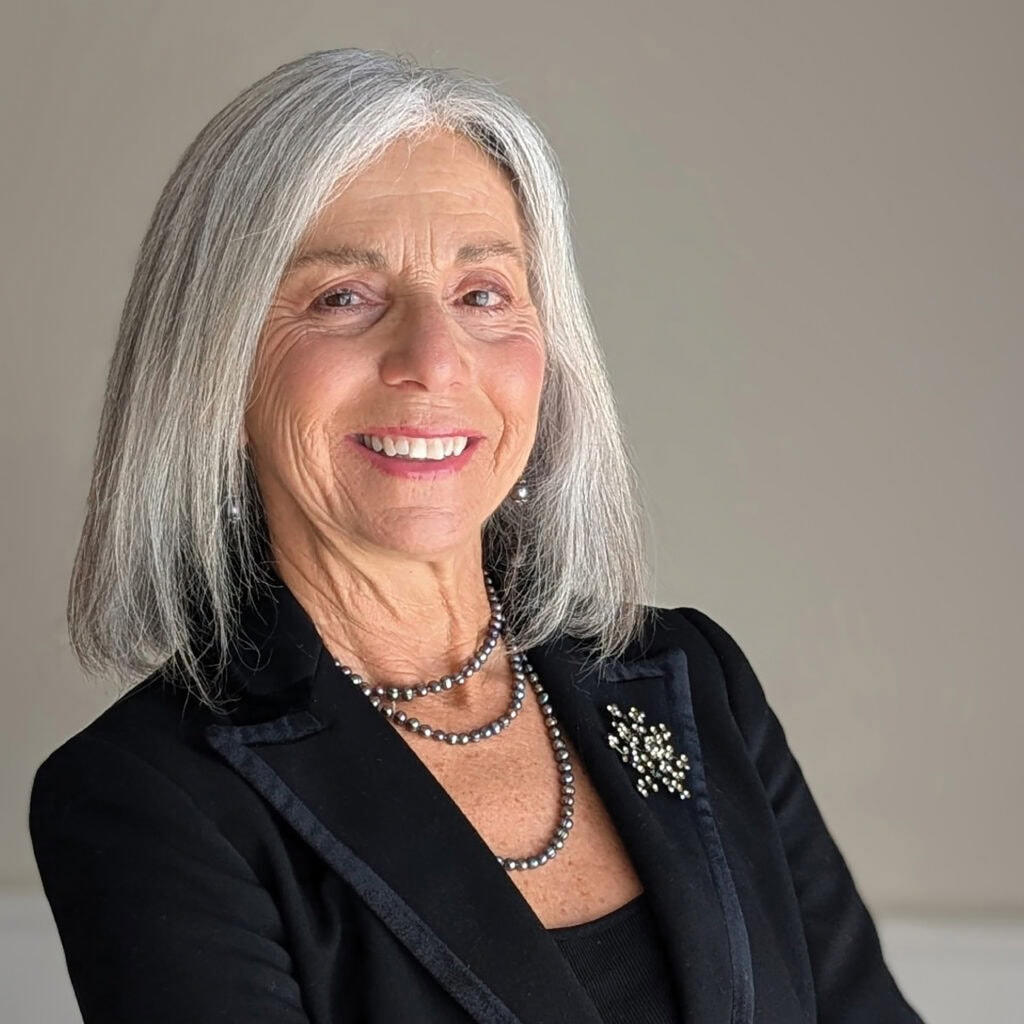
The Rising Star Award goes to Lindsay Sochar, who started from the entrepreneurial side, understanding firsthand the challenges, risks, and dedication it takes to build something from the ground up. As a manager at CRAFTED, she remains a strong leader and advocates for the creative community. She creates opportunities, supports growth, and helps connect people to resources they need to thrive. Moreover, Lindsay is also a talented painter. Her creativity and passion for art reflect who she is—thoughtful, driven, and expressive.
Donna Littlejohn
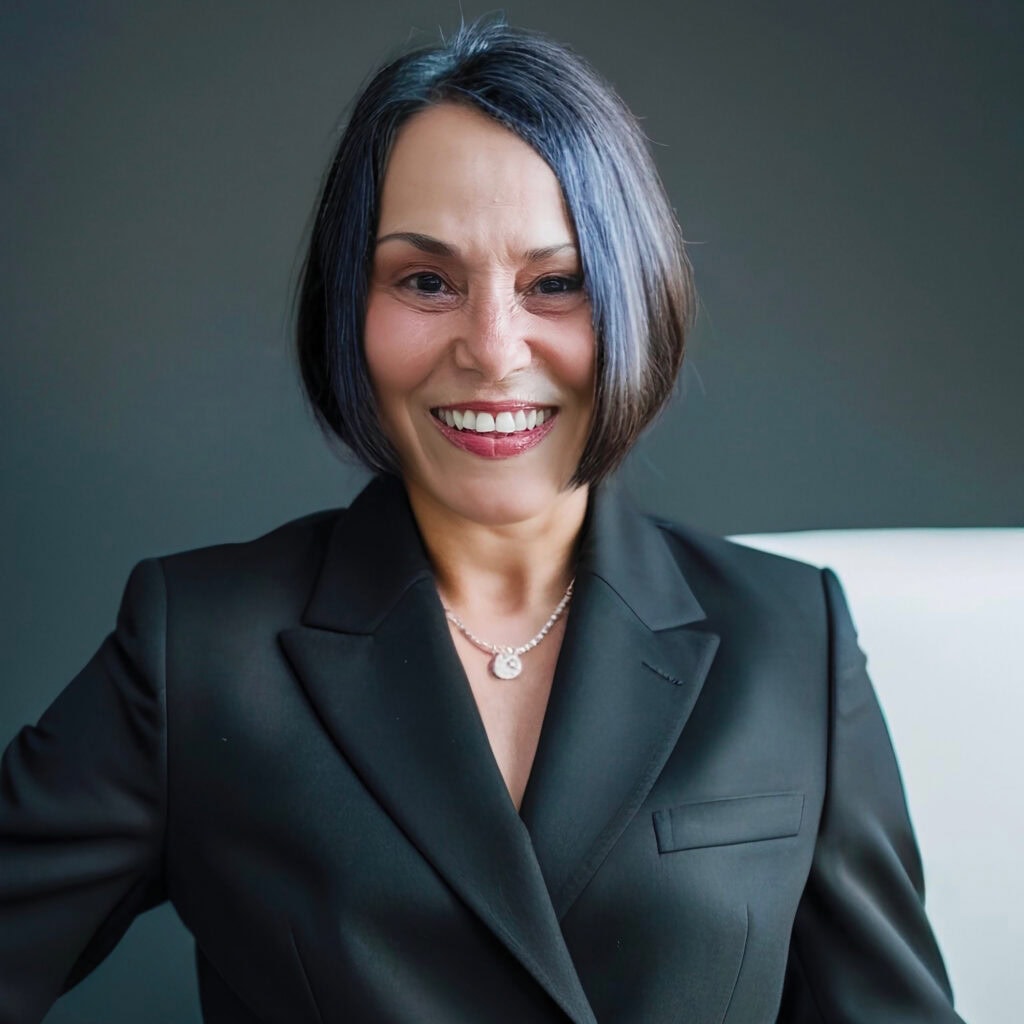
Donna Littlejohn is a reporter for the Daily Breeze, a modest, soft-voiced, news-focused community member who has been covering hard news, significant milestones, and human-interest stories for more than three decades. It’s her job to be a fair and honest reporter and to cover the news where and when it happens. A neighbor who cares deeply about San Pedro, she is always approachable in person and picks up her phone to hear your news story suggestion, your side of the story, or your related concerns. News reporting is a tough, selfless job. But Donna does it instinctively, fairly, and objectively, showing her dedication, year after year, to engage with our local stakeholders and to chronicle the history of our community as it unfolds.
Donna received a bachelor’s degree (double major) in journalism and political science from California State University, Long Beach, and began her career in daily journalism with the San Pedro News-Pilot, transferring to the Daily Breeze staff in 1998 after the San Pedro publication closed.
Lucrecia Jacobson
Lucrecia Jacobson is a local San Pedran and long-time volunteer with Grand Vision Foundation. Lucrecia has graciously opened the beautiful home she shares with her husband, John, to countless nonprofits, hosting dinners, whiskey tastings, and artist talks.
In 1963, at the age of three, Lucrecia moved here from Argentina. She later attended Mary Star and got her college degree at Cal State Long Beach. She was an ultra-marathoner, running 50-mile races in Boston, LA, Paris, and the Jungfrau Marathon in Switzerland. In her 40s and 50s, she competed in a marathon every month. She started swimming in 2010, was a Polar Bear Queen in 2016, and swims every day the weather will allow.
Since the early 1990s, she has been a substitute teacher, primarily at South Shores Elementary School, and retired after 25 years last year.
Olga Chavez
Olga Chavez is the Corporate Social Responsibility and Public Relations Lead for Marathon Petroleum Corporation in Southern California, including the Los Angeles Refinery. For the past 12 years, Olga has been responsible for overseeing a multi-million-dollar philanthropy budget to support local nonprofits and the communities they serve. Olga works with the Marathon Leadership Team to develop and implement priorities and strategies to achieve balanced public policy and a consistent approach that ensures impactful community investment, outreach, and employee volunteerism. She firmly believes in giving back to the community, and Marathon supports her efforts.
Olga was born and raised in Cuba. She and her family immigrated to the United States 40 years ago. She comes from humble beginnings—her father was a chef and her mother a caregiver. Her beloved brother passed away not long after they arrived in the United States. spt
Once in a blue moon, I receive invitations from local restaurants to visit their establishments.
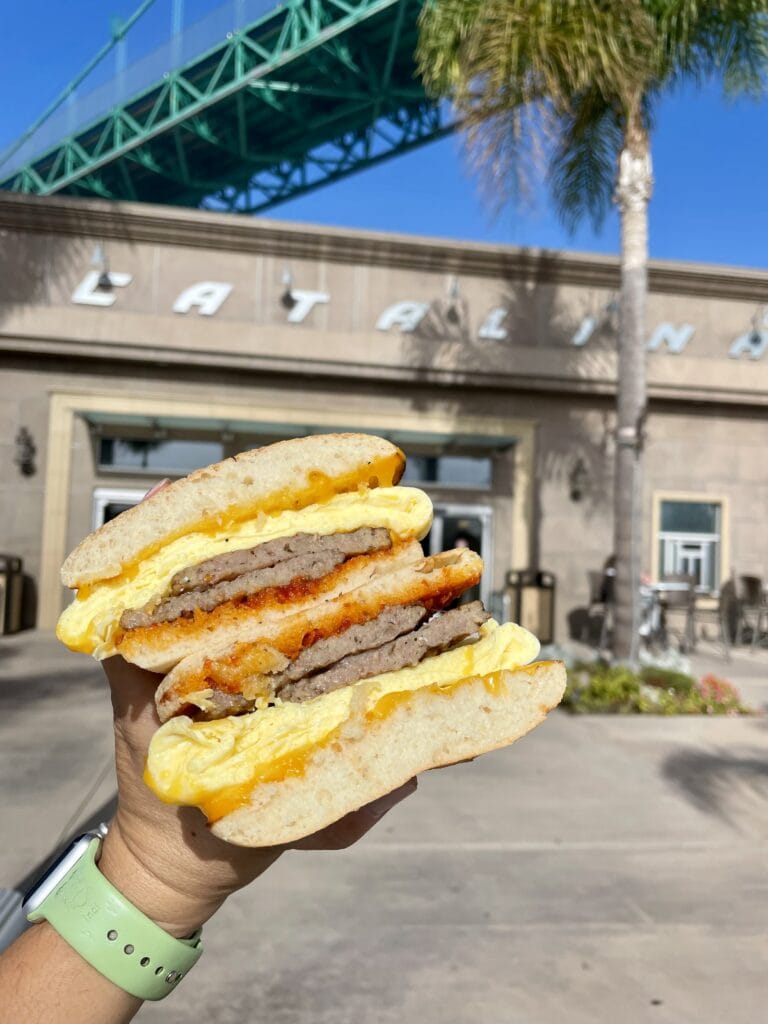
Express Grill’s breakfast sandwich with sausage. (photo: Sanam Lamborn)
Last fall, I received an email from the marketing team at Catalina Express (Berth 95 at Swinford and Harbor Boulevard) inviting me to try their Express Grill grab-and-go. I reviewed the menu they sent me, and, truth be told, I went in with low expectations.
Boy, was I wrong.
I had not been to the Catalina Express terminal in San Pedro in about a decade, since my last visit to Avalon. As soon as you walk into the terminal, at the foot of the Vincent Thomas Bridge, you feel excited about hopping on a ferry to either Avalon or Two Harbors. Until the pandemic, there was a bistro where passengers could buy food or have drinks at the bar before boarding or after their return.
For those of us who live in San Pedro, though, I think this is a hidden food gem.
The bistro is not back yet; however, Express Grill offers good takeout. Upon arrival, I was introduced to Vincent Daluisio, the land-based food and beverage manager. Vince’s easy, inviting manner left me comfortable enough to let him choose what he wanted me to try from the menu. I chuckled when one of his choices was the one thing that I would have never ordered for myself. Once again, a pleasant surprise awaited me.
The moment I bit into the Hamburgerrito, I knew I had misjudged it. After the second bite, I knew I had to write about it.
Let me break it down for you as Daluisio explained it to me: “a burger, but not in a bun, with everything you need in it.” The Hambugeritto is served in a warm tortilla filled with a third of a pound of Angus patty, cheddar cheese, lettuce, tomato, pickle, red onion, French fries, and a special sauce that reminds me of McDonald’s famous sauce, also similar to In-N-Out’s spread.
Honestly, everything about this wrap is satisfying. The combination of a good-sized patty, the crunch from the crisp lettuce, pickles, onion, and fries is just delightful. Then there is the perfect creaminess and layer of flavor that the special sauce adds to each bite. I have gone back for it since my first visit, because I like it so much!
Another item that I highly recommend is the Spicy Turkey Wrap. It’s practically impossible for a turkey sandwich not to be good when paired with crispy bacon, creamy avocado slices, pepper jack cheese, and jalapeño ranch dressing. Despite its name, I don’t find this wrap too spicy—it has just enough flavor to add a welcome spice to the mix.
If you stop by in the morning, I can’t say enough good things about the breakfast sandwich; I like mine with added sausage. It is made with a La Brea roll, fluffy folded eggs, cheddar cheese, and a delicious sundried tomato aioli that elevates this sandwich. It’s truly satisfying, and it’ll keep you full for a while.
Another really good option is the breakfast burrito, which is made with scrambled eggs, potatoes, and cheddar cheese. Protein of choice can be added at an extra cost. Attention, tater tot lovers, this burrito is for you! This is yet another hearty breakfast option.
Obviously, you don’t have to be a passenger to stop by for food at Express Grill. I love taking a walk along the Waterfront Promenade and stopping by for a bite to eat.
There are plenty of tables and chairs outside for people to sit and hang out. You can also purchase beer, wine, and/or champagne to enjoy with your food.
Depending on the time of the year, operating times vary. Please check their website for their most up-to-date schedule: catalinaexpress.com/express-grill. spt