

The end of the year is right around the corner, so it’s time to ask: Is San Pedro ready for 2026?
I don’t think so. With “Harborgeddon”—the closure of the Vincent Thomas Bridge—coming sometime in the fall, individuals may be anxious, but I don’t think the community as a whole is aware of how much chaos is about to descend on us. Not just traffic chaos, but economic hardship. I mean, who’s going to want to come to San Pedro if you can’t get here? You can’t shift 10,000 trucks a day off the bridge and onto side streets without creating a logistical nightmare.
There simply aren’t enough alternative routes to the Port of Los Angeles to make this anything less than apocalyptic in scope. Pity poor Wilmington, which will be ground zero for this impending disaster. Its side streets can’t handle the traffic as it is, let alone after the bridge closes. What becomes of Harry Bridges Avenue, Anaheim, or PCH?
Then we get to the Harbor Freeway. The 710 (Long Beach Freeway) is already a disaster, with 18-wheelers backed up for miles, waiting to reach the harbor terminals. That’s what we’ll be seeing on the 110.
There is an irony to all of this, as millions of dollars have just been spent reworking the Harbor Freeway off-ramps to ease the current traffic jams caused by container traffic on Harbor Boulevard. Whatever is being done won’t be enough.
Finally, we have the issue of the bridge itself. It’s being redecked because it was never built to withstand the kind of traffic it’s endured for the past 40-some years. The bridge opened in 1963 to handle the burgeoning vehicular traffic carrying dockworkers to jobs on Terminal Island and Long Beach, military and civilians to the Long Beach Naval Shipyard, and, of course, cannery workers. No one envisioned the Port of L.A. becoming the shipping behemoth it is today, with everything moved via container, or they would have made the VTB four lanes each way and made the deck much stronger.
Worse now, no one could have foreseen a day when container ships would be so large they couldn’t fit under the Vincent Thomas. That’s the dilemma facing POLA today: redecking an obsolete bridge. They’ve already decided it’s not feasible to raise the bridge at this time, but turning away ships that can’t reach the terminals at China, TraPac, or NYK will mean millions of dollars in lost revenue. How long will it take to recoup the billions a new bridge will cost?
Then again, where do you build a new bridge that can accommodate both the new ships and the container traffic? It can’t be done alongside the Vincent Thomas, like Long Beach was able to do when it built the new Gateway Bridge. There’s no room at either terminus on the Main Channel to do that without disrupting terminals already in place. There aren’t a lot of options available to POLA.
The best idea I’ve heard is building a tunnel under the channel. It sounds fantastic, but if they can build the Chunnel under the English Channel, anything’s possible. Otherwise, with the closure of the federal prison, maybe the port can buy up that land and create terminals for the newer, bigger ships that can’t fit under the VT.
MORE SPIT-BALLIN’
While we’re on the subject, let’s talk about those water taxis being planned to carry people between San Pedro and Long Beach during the 2028 Olympics. A nice idea, but how about we think about helping local residents first? Like, why don’t we put those taxis into service once the bridge closes and find a way to get dockworkers (and others) from San Pedro to their jobs on Terminal Island and Long Beach? All that would take is some decent parking on the San Pedro waterfront and a small space for a taxi wharf because there would be plenty of room for taxis to disembark workers at terminals all along L.A. and Long Beach harbors. spt
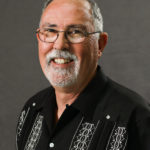
San Pedro native Steve Marconi began writing about his hometown after graduating from high school in 1969. After a career as a sportswriter, he was a copy editor and columnist for the News-Pilot and Daily Breeze for 20 years before joining the L.A. Times. He has been writing monthly for San Pedro magazines since 2005, and in 2018 became a registered longshoreman. Marconi can be reached at spmarconi@yahoo.com.









Share Your Comments