
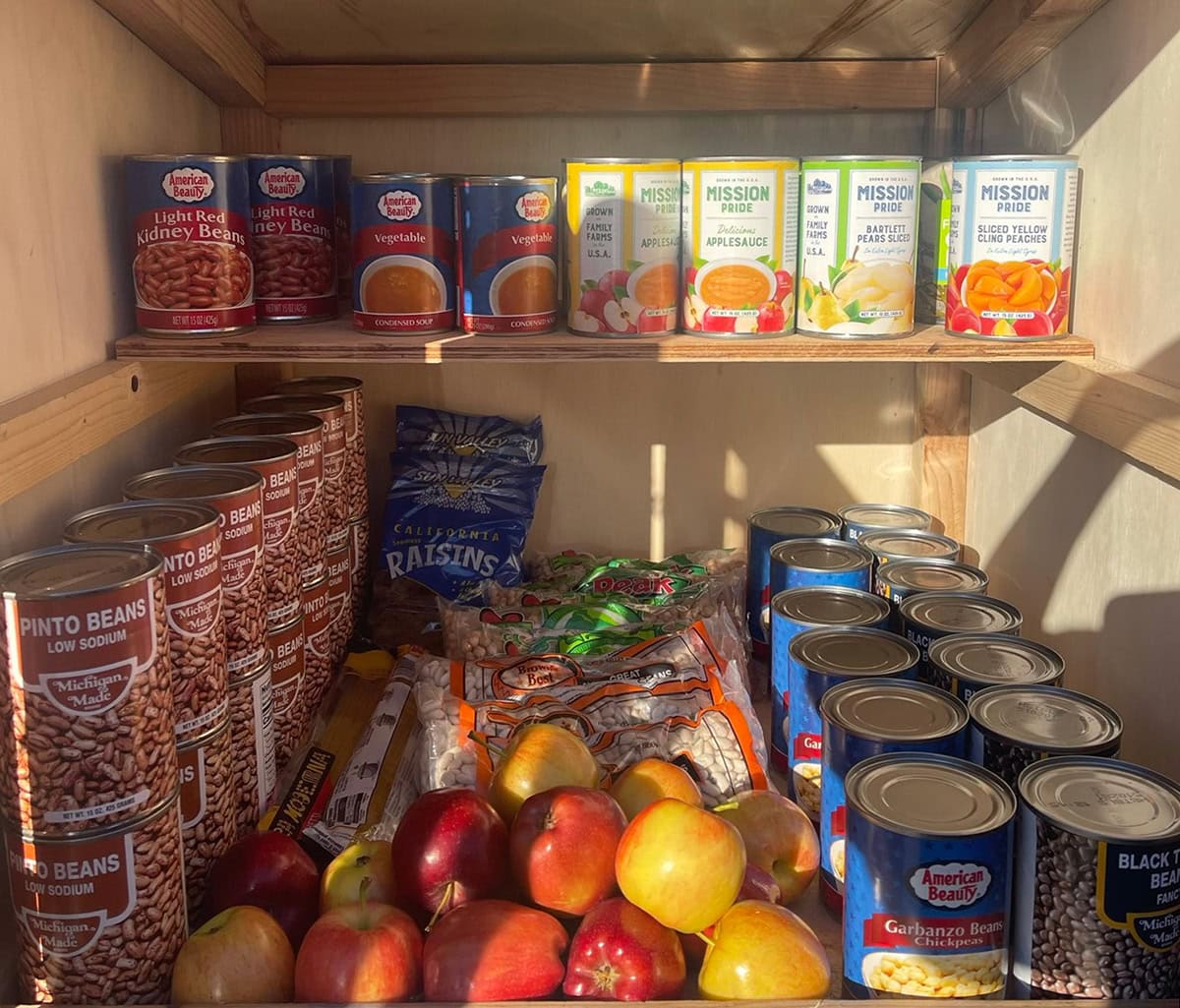
Several months ago, as conversations about potential cuts to SNAP (Supplemental Nutrition Assistance Program) benefits, rising food prices, and an uncertain economy were unfolding, a group of San Pedro residents came together with a question: How can we help each other with daily needs? From that concern, the San Pedro Community Collective was formed.
Volunteers began creating small food pantries throughout San Pedro, built by neighbors for neighbors. Similar to the Buy Nothing movement (neighbors giving and receiving things freely at no cost), the pantries are rooted in sharing without money and in building connections between people who may live just a few doors apart but have never met before.
The Collective is made up of everyday community members. As local volunteer Steve Casares explains, “Take what you need, give what you can. Community activism improves neighborhoods because it creates a feeling that people care when they help each other.”
The goal is mutual aid, neighbors helping neighbors, similar to a time when asking your next-door neighbor for a cup of sugar was normal, and sharing happened because there was enough to share. The support is inclusive and not aimed at specific populations. The intention is for people to be able to walk from their homes and access what they need without shame or barriers.
What started with just two food pantries, some resembling the little free libraries found around town, has grown across San Pedro. Anyone can place a pantry on their property, whether at a home or a business.
The pantries typically contain shelf-stable foods such as canned goods, beans, rice, snacks, and sometimes fresh produce. Donations are open to everyone, and each pantry is cared for by the person who installed it. Some pantries are repurposed pieces of furniture, while others are handmade or a shelf in a tree—the Collective plans to host a future workshop to teach residents how to build their own pantries.
Volunteers also recognize the large amount of waste generated in Los Angeles, including food and clothing that end up in landfills. By encouraging the sharing of items people no longer need, the Collective supports efforts to reduce waste while also meeting real community needs.
Just as important is shifting the narrative around asking for help, making it more normalized and not a failure, as society has been socialized to believe. With estimates suggesting that nearly 10,000 people in San Pedro experience food insecurity, the Collective believes no one in our town should go hungry.
Traditional food donation distribution systems often serve people piecemeal, typically through nonprofit organizations focused on specific groups. While those efforts are important, they do not reach everyone. The San Pedro Community Collective is trying something different. It is volunteer-run, not a nonprofit, not a business, and not driven by funding. It is neighbors organizing from the ground up.
“Nonprofits cannot solve what for-profits cause,” says Casares.
As people began leaving clothing at food pantries, which proved ineffective, the Collective identified another need. This led to the creation of community clothing swaps. Two successful events have already taken place in local parks. The first was held before Halloween, giving neighbors a chance to find costumes for themselves and their families. The swaps are not trades. No one needs to bring anything in order to take something, and everyone is welcome.
Today, the San Pedro Community Collective has nearly 400 members on social media and hosts in-person and Zoom meetings that are open to all.
To learn more, visit sanpedrocommunitycollective.org or find them on Facebook or Instagram at @sanpedrocommunitycollective. spt

Jennifer Marquez can be reached at jennifertmarquez@yahoo.com and @jenntmqz on Twitter and Instagram.






Share Your Comments