


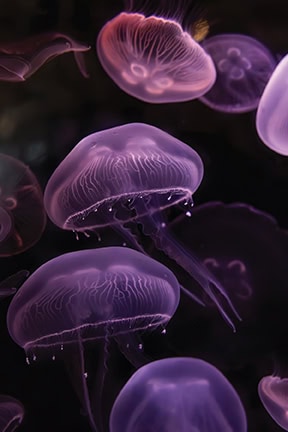
Somewhere in the back of the Cabrillo Marine Aquarium, past the tank of swell shark pups and the moon jellies suspended like pale lanterns, past the octopus and the grunion exhibit and the moray eels, there is a room most visitors will never see.
It hums. It filters. It chills. It sterilizes with ultraviolet light and introduces living bacteria into the water at precise intervals. The aquarium’s new life support system—$7.6 million worth of sensors, pumps, and redundant failsafes—does exactly what its name promises. Without it, nothing in those tanks survives.
“Our animals are now in such a safer space,” says Crislyn McKerron, the aquarium’s executive director. “That’s a bit of an understatement to say.”
McKerron has run the aquarium for seven years, and for most of that time, her central preoccupation was the system she just replaced. The old one had been installed in 1981, back when, as she puts it, life support system engineering wasn’t really a specialty yet. It worked, after a fashion, but corrosion and age had turned maintenance into a full-time emergency.
“Our animal care team spent so much time maintaining that old, clumping, debilitated life support system,” she says. “Now they’re able to focus on expanding our animal care program.” The new system is automated, non-corrosive, and built with redundancy throughout: Now, nothing fails without a backup.
This spring, the aquarium reopened its main exhibit hall after an 18-month closure, unveiling the full scope of what it had accomplished during that time. The renovation is the centerpiece of CMA’s 90th anniversary—a milestone with humble origins.
In the early 1930s, Bob Foster, an LA County lifeguard, had been arranging a personal collection of labeled shells on a card table in front of his Venice Beach tower. By 1935, that modest display had migrated south to San Pedro’s Cabrillo Beach Bathhouse, where it fell into the hands of Dr. William Lloyd, a retired dentist with a passion for natural history—and what had begun as a beachside curiosity quietly took root as the Cabrillo Marine Museum.
In 1949, Dr. Lloyd retired and handed the museum over to local lifeguard John M. Olguin, who would become the face of the aquarium for decades until his passing on New Year’s Day 2011.
Ninety years later, in a building designed by Frank Gehry, the institution is still here, still free to the public, and, McKerron would argue, more essential to its community than ever.
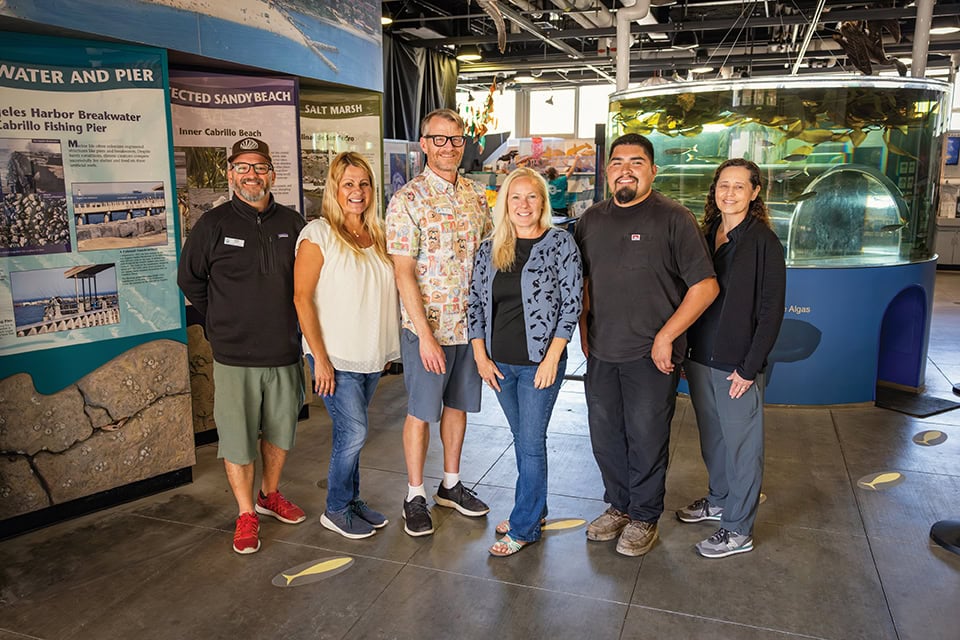
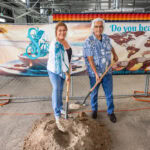
The funding story is instructive. The Friends of Cabrillo Marine Aquarium paid for the project’s design, a deliberate strategic move. “You need to be shovel-ready,” McKerron explains. “If you’re not, they’re going to find some other need for those funds” when they become available. When federal money flowed to the Los Angeles Department of Recreation and Parks in recognition of the department’s COVID-era service (its staff had run testing sites, food drives, and educational programs for children of first responders), Cabrillo was positioned to catch it. The Port of Los Angeles contributed an additional $2.4 million. The life support system had been deteriorating for years, and both agencies knew it. “Nobody wants to see anything happen to the animals,” McKerron says simply.
The renovation required temporarily relocating much of the aquarium’s collection. Some animals went to holding facilities on-site; others (rockfish, certain invertebrates) were transferred to Monterey Bay Aquarium and the Aquarium of the Pacific. The seahorses stayed. So did the octopus, the breeding swell sharks, and the abalone.
“Seahorses are very hard to collect in the wild these days,” McKerron notes. When the time came to restock, the aquarium’s California Fish and Wildlife permits allowed staff to collect replacement animals directly from the ocean, a fittingly hands-on approach for an institution that still pipes its water straight in from the sea, a grandfathered arrangement most aquariums can only envy.
Through all of it, the aquarium stayed open. McKerron had made that decision deliberately: Too many schools depended on it, too many Title I students arrived on scholarship buses, too many families from across Los Angeles counted on it being there. Staff ran puppet shows, tide pool walks, and courtyard programs with mini ecosystems on carts. “There’s no way we could just sit back and say, ‘We’ll just do a year and a half of not giving back,’” she says. Attendance barely dipped.
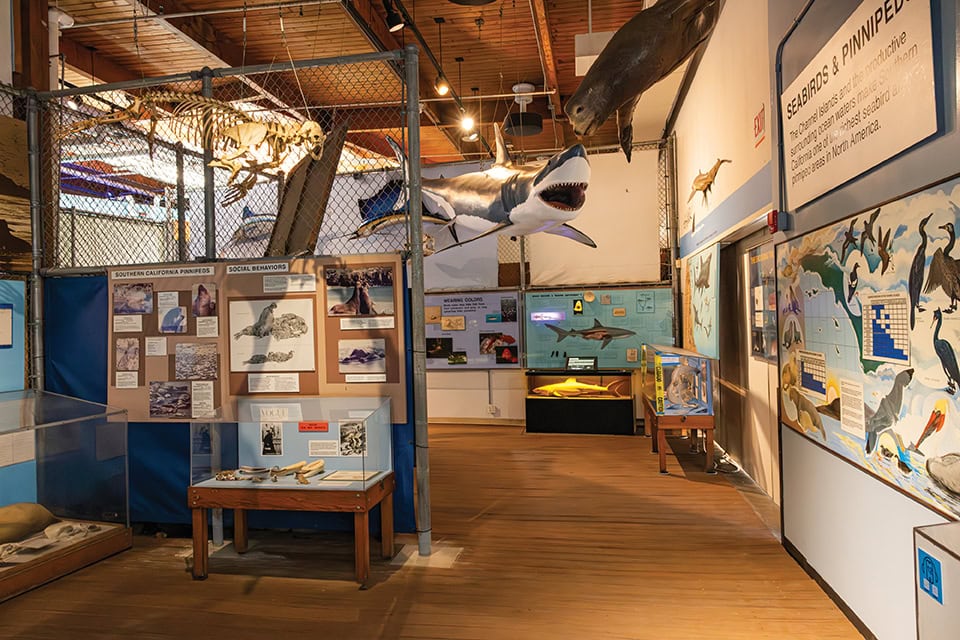
The visitor-facing renovations match the ambition of what happened behind the walls. The main exhibit hall now opens with a wayfinding exhibit that finally explains what the hall has always been doing: walking you through the ecosystems right outside the door, from salt marsh to tide pool to open ocean. New bilingual signage and a Spanish-language audio tour extend that welcome further.
A new Jelly Lab offers a window into the aquarium’s jellyfish-culturing program, one so successful it supplies institutions across California. The new Collections Room—with its angler fish, whale bones, and articulated crab skeletons—nods deliberately to the aquarium’s museum origins. “I can’t understate the influence of our museum’s past,” McKerron says.
The building’s exterior itself remained untouched. Gehry designed the structure in the late 1970s, and his spare, industrial aesthetic still defines the place. He visited just two years ago, McKerron recalls, a detail that carries more weight now, given Gehry’s death in March 2025. No changes were made to his work. “It wasn’t a restriction,” she says. “But his work is something that we honor.”
What McKerron keeps returning to, when asked what the renovation revealed, is not the infrastructure or the exhibits or the funding equations. It’s something harder to quantify. During the closure, when the main hall was dark and the construction crews were threading pipe through the walls, people kept coming anyway. Boy Scout troops. Community centers. Families who just wanted to be near the place. “The demand to come here did not decrease,” she says. “Even with that. Even with the community knowing.”
Ninety years from a card table on Venice Beach, the work has expanded considerably. But the instinct behind it—to put something out for the public, for free, and let people gather around it—has not changed at all. spt
The Cabrillo Marine Aquarium is located at 3720 Stephen M White Dr. For more information, call (310) 548-7562 or visit cma.recreation.parks.lacity.gov.

Aaron McKenzie is a director, photographer, and producer who has called San Pedro home since 2014. Whether he's exploring the town’s local history, its arts scene, economics, or maritime industries, Aaron’s writings for San Pedro Today are just his selfish excuse to learn about his fellow San Pedrans and this cool place we call home. Follow his adventures on Instagram at @aaronwmckenzie.






Share Your Comments