
If you’re still looking for something to read this summer, I have two worthy candidates in front of me.
They are probably the largest and smallest books produced by San Pedro natives.

The first is the expanded second edition of Mexican American Baseball in the South Bay. Fermin Lasuen grad (1971) and co-editor Ron Gonzales informed me, when I reviewed the first edition in August 2022, that there would be more to come in this excellent sports history, but I had expected a Volume 2. Instead, we now have everything in an 816-page monster, almost double the length of the original.
There is more content about players from San Pedro, Wilmington, and Terminal Island, as well as Harbor College, the baseball fields on North Gaffey, and the Field of Dreams. New contributors include Lefty Olguin, Victoria (Brucker) Ruelas, Bobby Ramirez, Jesse “Chuy” Ibarra, and Irene and Richard Samudio.
Packed with photos, this remains a must-have on your San Pedro history shelf and a bargain at $30 (Amazon).

The second book, clocking in at just 69 pages, is Tales from the Ammo Dump: A Vietnam Vet Recalls His Time in the United States Army by Van Barbre. I told Barbre’s story here in November 2017, and it was only recently that his daughter persuaded him to put it in writing.
Barbre, a W‘64 graduate of San Pedro High, was drafted in 1965 and a year later found himself in South Vietnam, where he survived several harrowing experiences that you’ll have to read about yourself.
A retired postal worker, Barbre, now 80, is a prolific videographer. Besides a blog, he has nearly 600 videos on YouTube. Most are family- and church-oriented, but he has dozens of instructional videos for home and garden DIY projects, as well as videos of old San Pedro. His video tribute to Vietnam veterans has garnered more than one million views.
Tales from the Ammo Dump is available on Amazon for $5.49.
MORE HISTORY
Reminders of San Pedro’s long association with the military (see the books above), which dates back more than a century, continue to reverberate today, as illustrated by recent stories that have crossed my news feed.
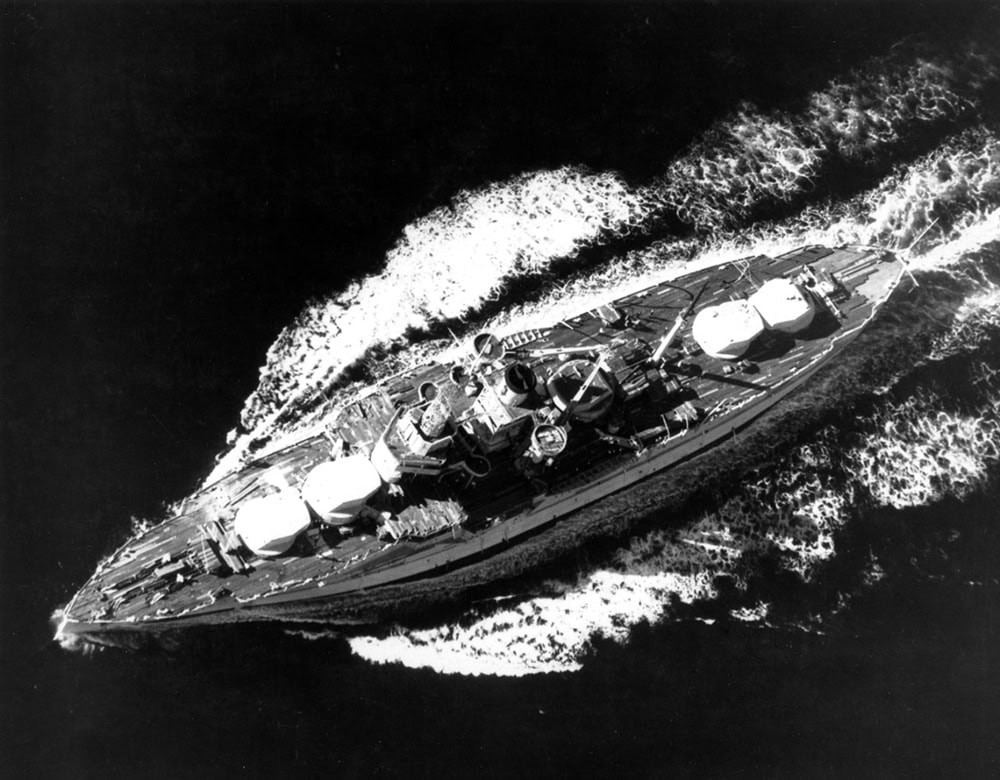
Among the innumerable tragedies surrounding the Japanese sneak attack on Pearl Harbor on December 7, 1941, was the sinking of the USS Utah.
What made the loss of 58 men, including two from San Pedro, especially tragic is that the attack on the Utah was a mistake. That was obvious at the time, but I only learned about how that mistake was made when an article by Alan D. Zim, published on the U.S. Naval Institute website in 2020, appeared on Facebook earlier this year.
Zim explains how the Japanese wasted precious torpedoes on the obsolete dreadnought, which had been converted into a gunnery training ship, because they mistook it for an aircraft carrier or contemporary battleship. The fact that it was anchored on the side of Ford Island, where carriers out at sea at the time of the attack normally moored, was a factor, along with sun glare and haze that affected the pilots’ vision.
Thus, the Utah was attacked, even though pilots had been explicitly told not to target it. Six torpedoes were launched at it; only two struck, but the Utah rolled over and sank within minutes.
There were 461 survivors. Among those lost were Ship’s Clerk William A. Juedes, 24, and Seaman 1st Class Leroy H. Jones, 21, whose wives had remained in San Pedro when the fleet moved to Hawaii. They are among those still entombed on it today, as the Utah was never salvaged and remains as a memorial.
Yet another wartime tragedy took the life of San Pedro’s Ray Elsworth Scott, 34, an Electrician 1st Class on the submarine USS F-1 on December 17, 1917. The F-1 was part of the Pacific submarine fleet that was based in San Pedro prior to and during World War I. It sank off the coast of San Diego when, during training exercises, it collided with another submarine.
Scott, who was married, was one of 19 men who went down with the sub; there were three survivors.
The F-1 was located in the 1970s and first photographed in 2014, but it was only earlier this year that researchers were able to survey the wreckage, which lies at a depth of more than 1,300 feet, with high-resolution imaging. See the remarkable pictures at cbsnews.com/news/wwi-submarine-uss-f-1-images-san-diego-coast.
Like the Utah, it’s a designated war grave. spt
San Pedro native Steve Marconi began writing about his hometown after graduating from high school in 1969. After a career as a sportswriter, he was a copy editor and columnist for the News-Pilot and Daily Breeze for 20 years before joining the L.A. Times. He has been writing monthly for San Pedro magazines since 2005, and in 2018 became a registered longshoreman. Marconi can be reached at spmarconi@yahoo.com.






Share Your Comments