

Sometime around 2010, Linh Le was a few drinks deep on the patio of a bar in downtown Huntington Beach, complaining about the absence of something she wanted and couldn’t find: a band, made up entirely of women, that she could actually be in.
It was the kind of complaint people make without expecting anything to come of it. Jen Carlson overheard her, introduced herself, and they became immediate friends. Within a year, Carlson had co-founded Bad Cop Bad Cop.
“I never thought it would come to fruition,” Le says now, fifteen years later, laughing at her younger self a little.
Le wasn’t in the original lineup—that was Carlson on bass, guitarist and vocalist Stacey Dee, guitarist Jennie Cotterill, and drummer Myra Gallarza, who formed the band in January 2011 in the Los Angeles area and immediately started playing as many shows as they could find. But when Carlson eventually departed, she introduced Le as her replacement, a handoff that everyone credits as the moment the group’s chemistry finally locked into something lasting.

Le had grown up in Rochester, New York, moved to Philadelphia after high school, and arrived in Southern California on a one-way ticket with a performance career in mind and a fairly impressionistic sense of what she was getting into.
“My impression was just like, okay, I’m moving to Southern California,” she says. “Everybody smokes weed and surfs.” She wasn’t wrong, but Southern California, as she discovered, contains multitudes, and one of them, tucked away at the bottom of Los Angeles, is San Pedro.
San Pedro is where Bad Cop Bad Cop has rehearsed for most of its existence, and the town has shaped the band the way places shape people who are stubborn enough to stay. It is a port neighborhood with a punk tradition that punches well above its weight: the Minutemen came from here, and there is a lineage of raw, uncompromising music made by people who were never particularly driven by a need to be discovered.
Dee understands the inheritance. “It’s the home of Mike Watt and some of the best, coolest punk music from Los Angeles,” she says. And yet, in the same breath, she is honest about the band’s relationship to that tradition: “San Pedro has a sound, but we don’t as much. We’ve always kind of been on the outside of bands from Pedro.”
Outsiders in a place that has always prided itself on being outside. This is, perhaps, the most Pedro thing about the band.
They built their following the old way: by showing up. The Redwood Bar in downtown Los Angeles became a regular haunt. So did VLHS, a DIY space someone had carved out of a converted storage warehouse (there was an indoor mini skate ramp) where a loose, overlapping scene of LA and San Diego punk bands came up together.
In 2014, Dee convinced Fat Mike, founder of Fat Wreck Chords, to catch one of their sets. He signed them shortly after first seeing them perform. The 2014 Boss Lady EP announced what the band could do—three- and four-part vocal harmonies riding melodic punk structures, lyrics that swung between the anthemic and the confessional—and their 2015 full-length debut, Not Sorry, confirmed it. Tours multiplied. A reputation grew. The momentum felt real and sustainable.
Then came the years that nearly ended everything.
Mid-decade, during a stretch of relentless touring, Dee’s addictions spiraled into crisis. The band staged an intervention. The terms were not negotiable: get help, or the band is over. It was a moment that threatened not just the group’s future but the friendships underneath it, and Le, thinking back on it now, is clear about where her priorities actually sat.
“The number one thing for me wasn’t really about the longevity of this band,” she says. “I was scared for my friend.” Her initial reaction, she admits, was anger. “I was like, I’m out, we can’t do this.” But that gave way to something else. “We need to make sure our friend’s okay first. And then see if that ties into being in this band.” She pauses. “If we can make this friendship work, then maybe we can make this band last.”

From the other side of that crossroads, Dee is plain about what she stood to lose. “I had worked for so long to be in a band that got the opportunities that we were finally starting to get,” she says. “I saw something in us that was really special. I just didn’t want it to end.”
The decision to choose a different path—one she describes as frightening precisely because she had never tried it—became the hinge on which everything afterward turned. Not long after Dee got out of detox, the UK punk band Snuff invited them on tour.
“We just had the best tour and we were in such a great place,” Dee says. “And then everything just started opening up.” The 2017 album Warriors channeled that reckoning directly. The Ride followed in 2020, written through themes of self-love and mental health. The band had found something harder to manufacture than a good record: a reason to keep going.
In 2022, co-founder Jennie Cotterill departed and guitarist Alex Windsor joined. The band absorbed the change and kept moving. Now, with their fourth album Lighten Up (released in September 2025 on a joint partnership between Fat Wreck Chords and Hopeless Records) Bad Cop Bad Cop has arrived somewhere that feels, by their own account, unlike anywhere they’ve been before.
“This was the first album where we pretty much had full reign,” Le says. “Freedom to really do what we wanted.” What they wanted, it turns out, was permission to be honest.
Previous records, Dee explains, were shaped by an outside pressure to project strength, to hold vulnerability at a distance. “We were always told to be strong, unapologetically strong. Nobody wants to hear you being emotional,” she says. “That held us in a place where we weren’t able to really be truthful. Now we’re in a place where we’re actually really ready and happy to be truthful.”
For Dee, that truthfulness meant returning to territory she had deliberately avoided since getting sober: the years before, the reasons why. “This record was the first time I was able to go back and touch on some of the stuff that really hurt me,” she says. “There was a long time I just couldn’t because I was too afraid it would drag me back into that negative space.” That she can now write it, record it, sing it from stages in front of strangers is its own kind of evidence.
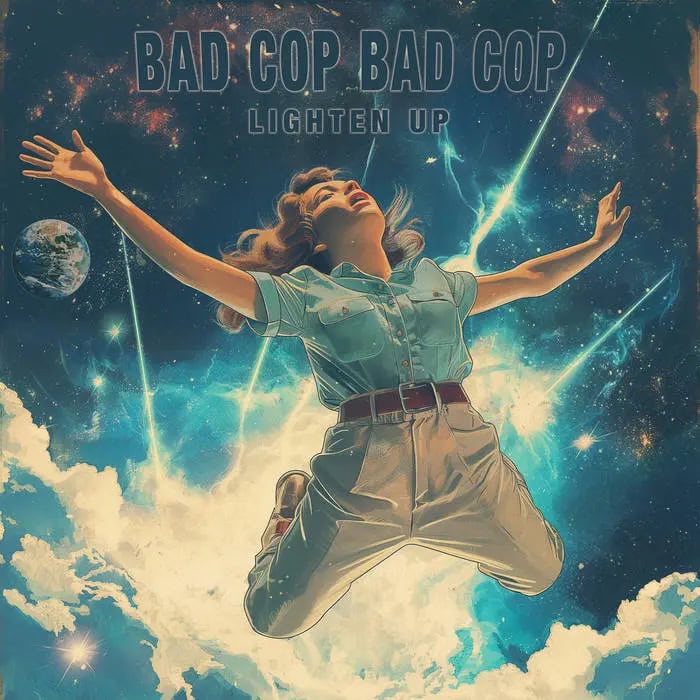
Le arrived at the same place by a different road. She describes herself as someone who held things in, who offloaded her interior life onto friendships until that arrangement stopped working. Therapy, she says, changed how she writes. For years the idea of putting her own experience into a song felt presumptuous—“who cares what I think? Who cares what I’m going through?”—until this album showed her otherwise. “It’s been beneficial to see that there are people that can relate with the same thoughts and feelings and emotions.” Dee, as is her habit, distills it: “I feel like we finally found our own voice.”
Both women talk about younger audiences with something close to tenderness. Le describes a moment from years ago: a Chinatown show, a friend’s daughter in the crowd, maybe five or six years old, transfixed, announcing she wanted to learn bass. That child is now Eloise Wong of the Linda Lindas.
“That’s the kind of impact that gives me the motivation and drive,” Le says.
Dee sees it from another angle: the band has become, somewhat unexpectedly, a voice for people—that is, for women above a certain age—who rarely hear themselves reflected in punk’s traditional mirror.
“We’re just so happy that we got picked to be spokespeople for this kind of demographic,” she says. “This happened for us later. It didn’t happen for us when we were young kids. And that’s pretty cool.”
When Dee talks about what she loves most about the life the band has made, she doesn’t reach for the obvious answers. Not the records, not the label deal, not the stages across Europe and North America. “I love being in the van and singing Blues Traveler with them,” she says. “I love getting to go to new places, swim in new places, sit in a hot tub and just laugh our asses off.”
“I’m proud of what we’ve accomplished,” Le says. “It really is a gift, and I’m excited to see what’s next.”
Dee, never one for half-measures, gets the last word. “I feel like we’re just getting started.”
In San Pedro, where the best things tend to arrive quietly and outlast everyone’s expectations, that sounds about right. spt
For more information on Bad Cop Bad Cop, including music and tour dates, visit
badcopbadcopmusic.com.

Aaron McKenzie is a director, photographer, and producer who has called San Pedro home since 2014. Whether he's exploring the town’s local history, its arts scene, economics, or maritime industries, Aaron’s writings for San Pedro Today are just his selfish excuse to learn about his fellow San Pedrans and this cool place we call home. Follow his adventures on Instagram at @aaronwmckenzie.






Share Your Comments