
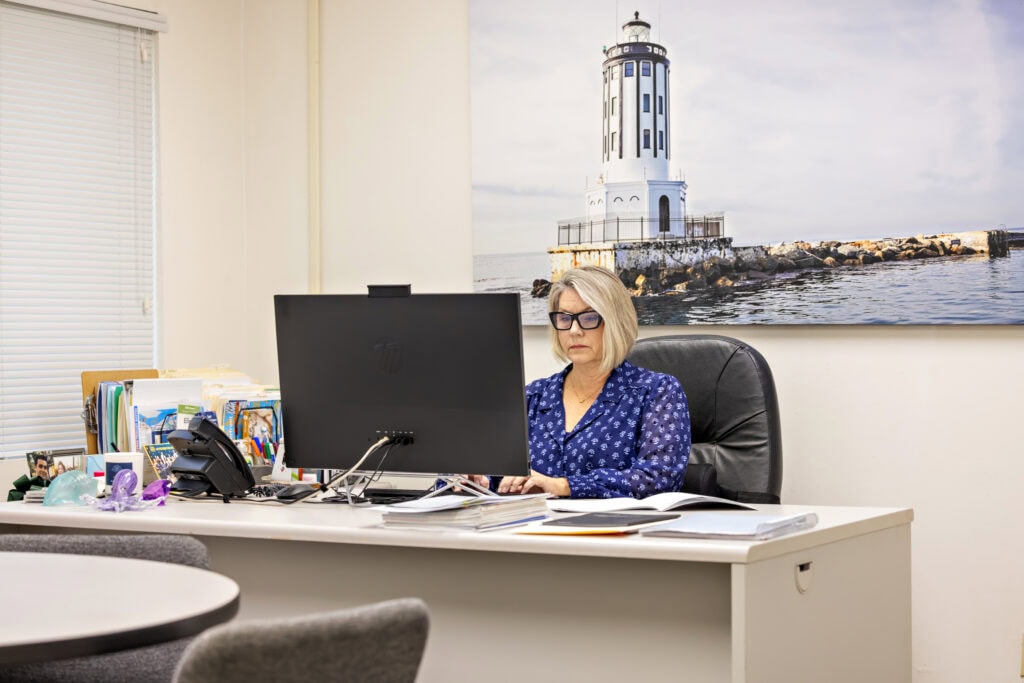
On a December morning in San Pedro, Elise Swanson starts her day the way she always does: coffee from Sirens, then a walk across Mesa to her Chamber of Commerce office on 7th Street.
She never knows who will call today. It could be someone asking about a broken streetlight. It could be a new business owner seeking help reviewing a lease. It could be an upset member threatening to drop their membership. Once, years ago, it was an email containing a death threat, which she turned over to the LAPD and then went back to work.
The San Pedro Chamber of Commerce has existed for 116 years. Even now, most residents can’t tell you what it does. If you stop people downtown and ask them to explain the Chamber’s function, you’ll get uncertain answers. Something about helping businesses? Something about events?
Swanson has made peace with the fact that the work itself—the testimonies at City Hall, the monthly board meetings, the years-long advocacy—remains largely invisible. What matters is that it happens. Someone has to show up. Someone has to walk Pacific Avenue with business owners and imagine a brighter future. Someone has to collect the voices and deliver the message. For 11 and a half years, that someone has been her.
THE PENINSULA PROBLEM
To understand the Chamber’s work, you need to understand San Pedro’s geography. Draw a circle with downtown at its center, and you hit water on three sides. The fourth side meets the freeway. This is both San Pedro’s protection and its problem.
When grocery chains study downtown as a potential market, they draw the same circles. They see water where they expect customers and conclude: the numbers don’t add up. For a decade, Swanson has had versions of this conversation. Trader Joe’s flirted. 7-Eleven toyed with a pilot concept. Always the same answer: sorry, no.
The absence of chains has created an unusual ecosystem. Independent businesses—the ones that couldn’t compete with Walmart or Costco in Torrance—survive here because the big operators mostly haven’t arrived. Distrito instead of Starbucks. Subterranean instead of Great Clips. JDC Records because there is no chain equivalent anymore.
“We haven’t been overrun by the big box operators,” Swanson says. But that’s also what makes it tough. The same isolation that preserves character makes growth difficult.
That geography also forces intimacy. “We’re forced to work together because we’re in this small, condensed space,” she says.
On any given day, Swanson might be testifying at City Hall about minimum wage policy or advocating for a water taxi between San Pedro and Long Beach. Or she might be on the phone with someone upset about graffiti that appeared overnight. People call the Chamber thinking it’s a city office.
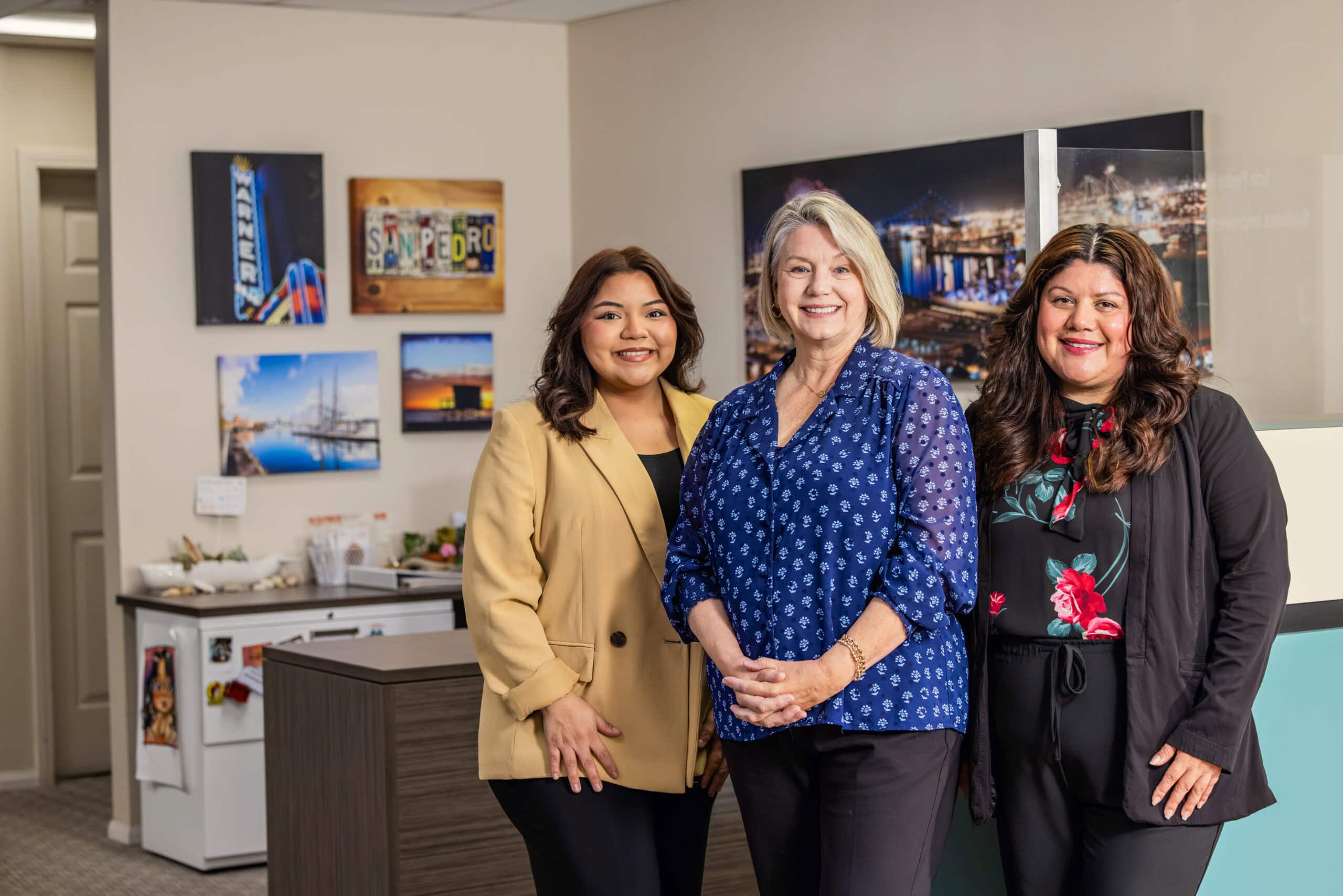
Mayra Garcia, the Chamber’s membership services coordinator, fields many of these calls alongside operations coordinator Kaitlyn Estevez. “They come to us because we’re kind of the face of San Pedro,” Garcia says. “So they call us, and then we direct them to the right person.”
The Chamber is part of San Pedro’s connective tissue, helping residents navigate everything from potholes to business permits. It’s also been crucial to San Pedro’s culture, hosting events such as the Spirit of the Holidays Parade, the Women’s History Month celebration, and monthly networking breakfasts and mixers. (The Chamber was also responsible for the much-loved and missed Taste in San Pedro, last held in 2016.) It’s gratifying work, but the cumulative weight adds up.
Lauren Johnson, who handles PR and branding for West Harbor and serves on the Chamber board, has worked alongside Swanson for years. “She carries the hopes and dreams of the community on her shoulders,” Johnson says. “She takes everything to heart and really wants to do well by the community. It’s an awesome responsibility that she does not take lightly.”
ADVOCACY & ACTION
The Chamber’s most surprising work might be what most people wouldn’t expect: homelessness intervention. When encampments formed around the Beacon Street post office, the Chamber didn’t look away.
Swanson served on LA City Councilmember Joe Buscaino‘s Homeless Services Advisory Task Force, pushing for solutions that made a lot of people uncomfortable.
The Chamber board partnered with Supervisor Janice Hahn and voted to support an interim shelter across from the post office. “Highly controversial at the time,” Swanson says. She faced hostile crowds at public meetings, but she knew that homeless encampments hurt everyone.
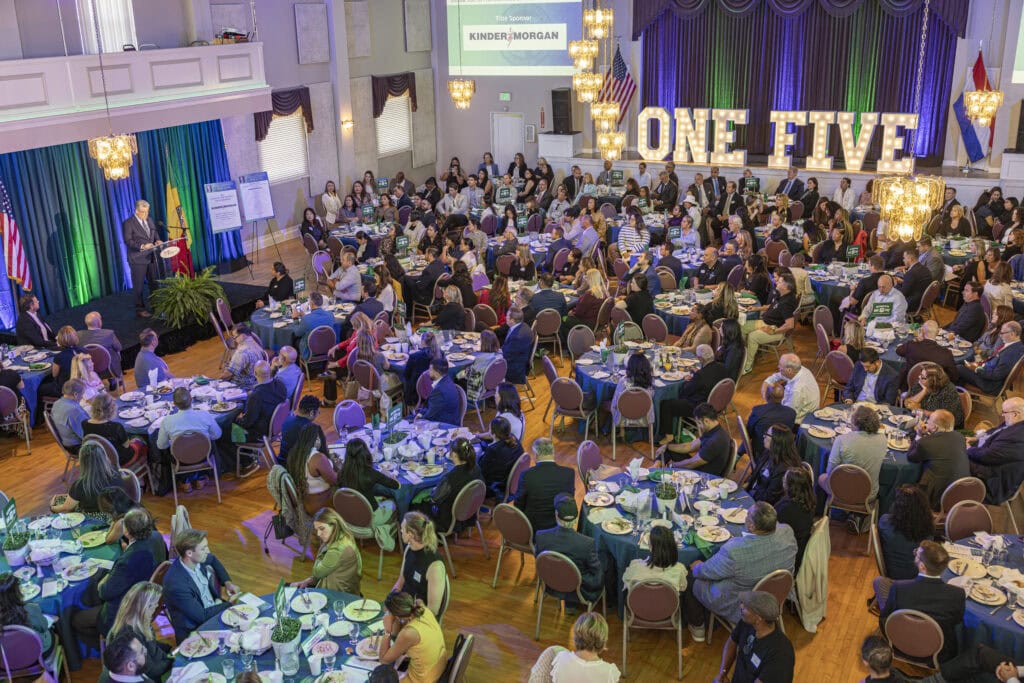
“We literally took the folks that were right on the sidewalk, walked them across the street, and put them under a roof with food, showers, workforce training, help getting their driver’s license, medical appointments set up,” Swanson says. “It was the right thing to do.”
Why would a business organization focus on homelessness? Because Swanson believes that community health and business health are a package deal. “If your employees aren’t stable, if your employees don’t have access to health care, food, housing, they’re going to struggle during the workday,” she explains.
The Chamber’s mission statement talks about advocacy and promotion, about making San Pedro a better place to live, work, and visit. It doesn’t mention facing hostile crowds at public meetings. It doesn’t mention watching her own children move to Oklahoma and Oregon because California housing is unaffordable.
“My heart breaks for our young families,” Swanson says, and you understand she’s not speaking theoretically.
During Fleet Week, Swanson rides the trolley without identifying herself, listening to visitors complain that stores on Pacific are closed, that there are bars on windows. This information becomes action, like the Pacific Avenue JEDI Zone, which involved two years of documenting conditions and building a case for beautification. And then there’s the visitor task force launching in January in preparation for the 2028 Olympics—hotels, cruise lines, the port, tourism operators, all coming together to tackle goals both big and granular: pull the weeds, replace signage, help small businesses prepare.
We’re showing San Pedro to the world. Are we going to be ready?
Swanson is thinking about the Olympics constantly. “We’re showing San Pedro to the world. Are we going to be ready?” She likens it to hosting a party: painting the baseboards, making everything just right. Except the world is watching and San Pedro looks, well, like San Pedro—a little rough around the edges. Can they clean it up in two years? And what becomes of the town’s character if that housecleaning goes too far?
RETURN TO THE WATERFRONT
Ask Swanson what she’s most proud of and she’ll walk you to the waterfront. “When I arrived in 2001 to work for then LA City Councilmember Janice Hahn, we were having conversations about redevelopment, so this has been a 25-year journey.”
West Harbor is rising now. Signed leases. Actual construction. Restaurants opening. An amphitheater people are already arguing about because, as Swanson puts it, “we San Pedrans can be a little surly.” But she’s attended enough Fleet Weeks and Lobster Festivals to know what happens when you bring people to the waterfront: The town comes alive.
The other project is Rancho San Pedro: aging public housing being rebuilt as 1,600 units of mixed-income housing. Twelve years of work. The Chamber is part of One San Pedro, supporting residents through the transition.
This is the time scale: decades. The things that anger people happen at evening meetings. The things that might help take so long that by completion, everyone’s forgotten who advocated for them.
A BALANCING ACT
What is San Pedro becoming? This is the question that hangs over everything. Swanson talks about balance constantly—preserve character while enabling growth, welcome development without displacement.

“San Pedro would lose its soul if you saw an influx of corporate chains,” she says, then adds: “I go to Starbucks, you know, I go to Target.” Some chains are fine. Too many would destroy what makes San Pedro distinct.
Her colleague, Anthony Luna, grew up here as a Boys and Girls Club kid. Now he’s Chamber board chair and owns his own company. Someone who needed social services grew into a business owner who advocates for the community. He’s a San Pedro success story.
But Swanson’s own children don’t live in the South Bay anymore. They left for affordable housing in other states. This is also a San Pedro story.
After 11 and a half years, she’s learned you can’t make everyone happy. You can’t increase the supply of housing with an eye toward affordability without angering homeowners who want property values to rise. You can’t keep San Pedro exactly as it was while preparing it for Olympic sailing and new cruise terminals.
What you can do is show up. Take the calls. Testify. Walk Pacific Avenue. Collect the voices. Ride the trolley and listen. Keep believing that the balance—impossible, contradictory, forever shifting—can somehow be maintained.
Sometimes people boo. Sometimes they drop their memberships. Sometimes they’re grateful and you never hear about it. Sometimes you look at the waterfront rising after 25 years and think: We did it. Sometimes you look at a housing development with new units averaging $900,000 and think: We failed.
All of these things can be, and are, true at once.
And so, on this December morning in San Pedro, Elise Swanson gets her coffee from Sirens and walks to the Chamber office and waits to see who calls, what they need, what’s possible, and what isn’t. The Olympics are two years away, West Harbor is taking shape, the grocery stores still haven’t come downtown, and the water still hits three sides.
She opens her email. She takes the calls. She goes to work. spt
For more information on the San Pedro Chamber of Commerce, visit sanpedrochamber.com.

Aaron McKenzie is a director, photographer, and producer who has called San Pedro home since 2014. Whether he's exploring the town’s local history, its arts scene, economics, or maritime industries, Aaron’s writings for San Pedro Today are just his selfish excuse to learn about his fellow San Pedrans and this cool place we call home. Follow his adventures on Instagram at @aaronwmckenzie.






Share Your Comments